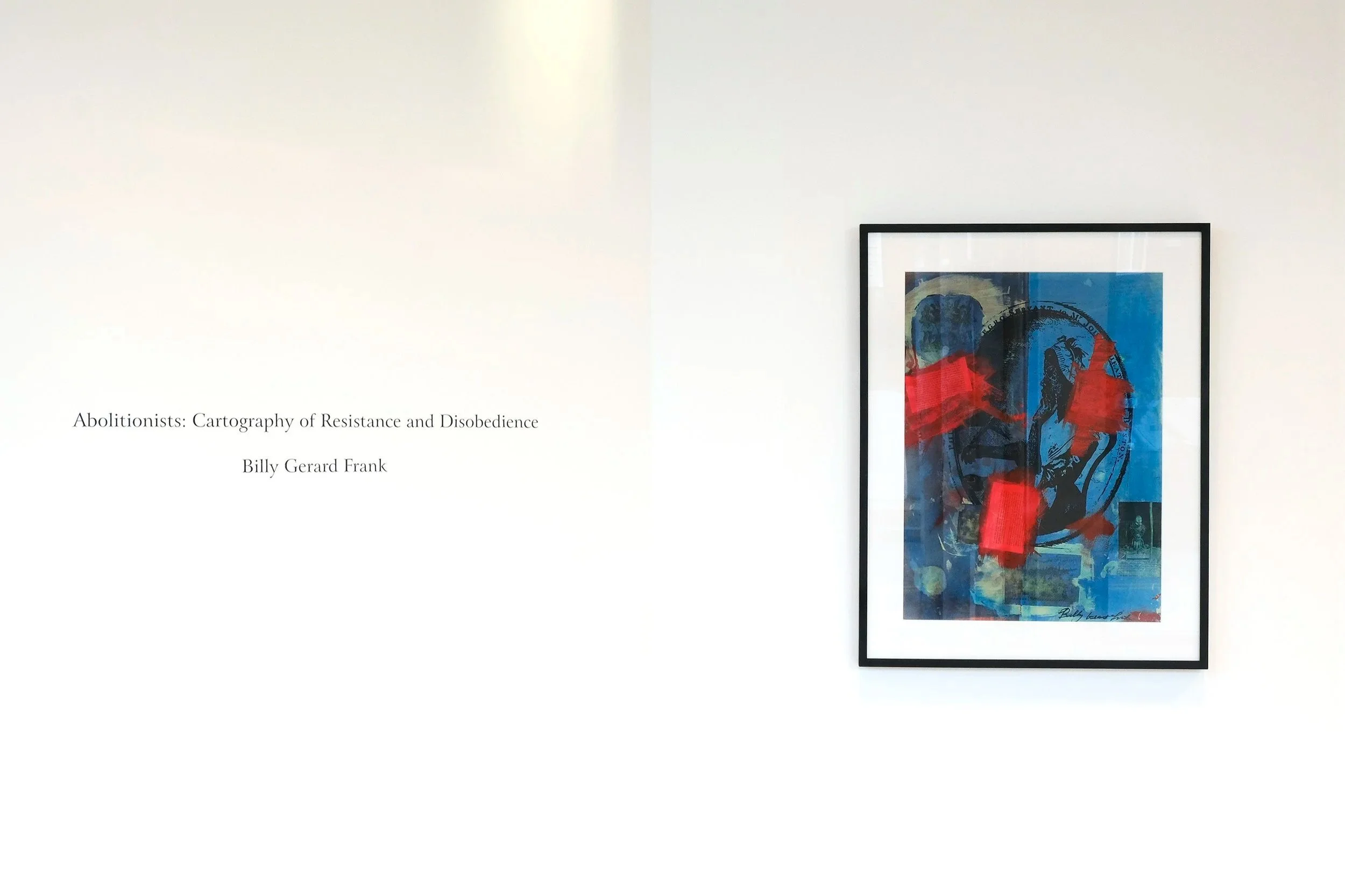
Abolitionists: Cartography of Resistance and Disobedience
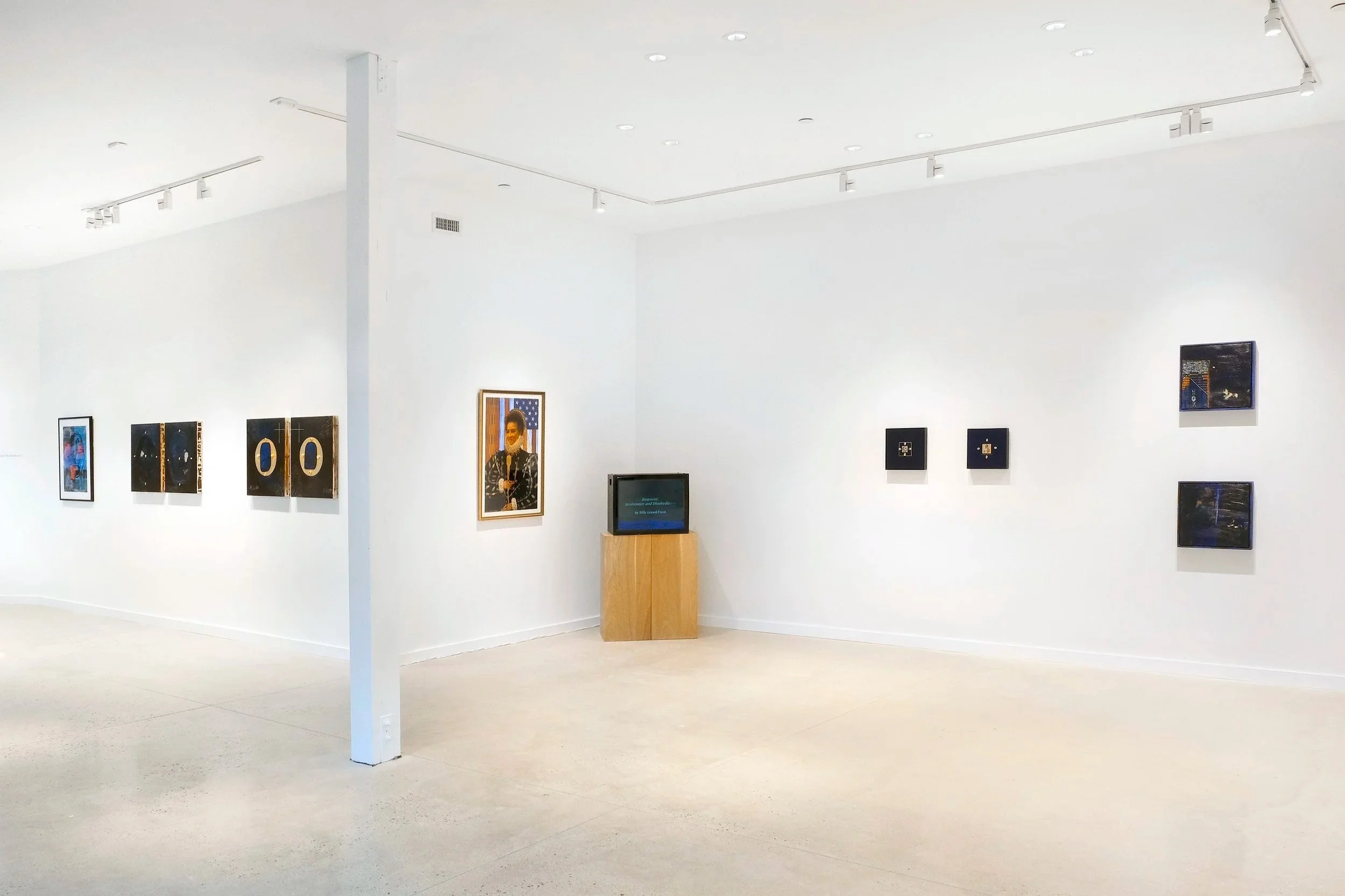
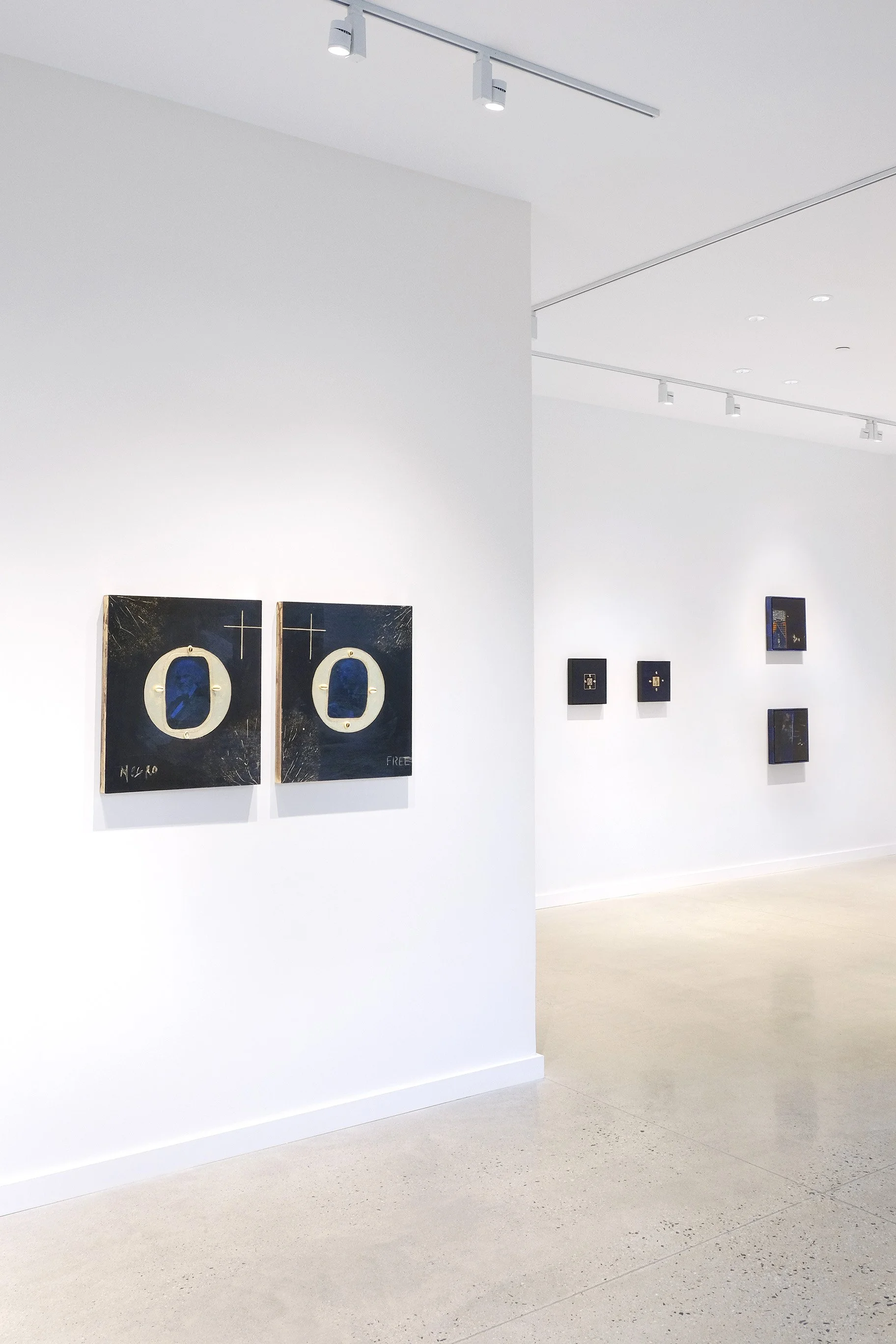
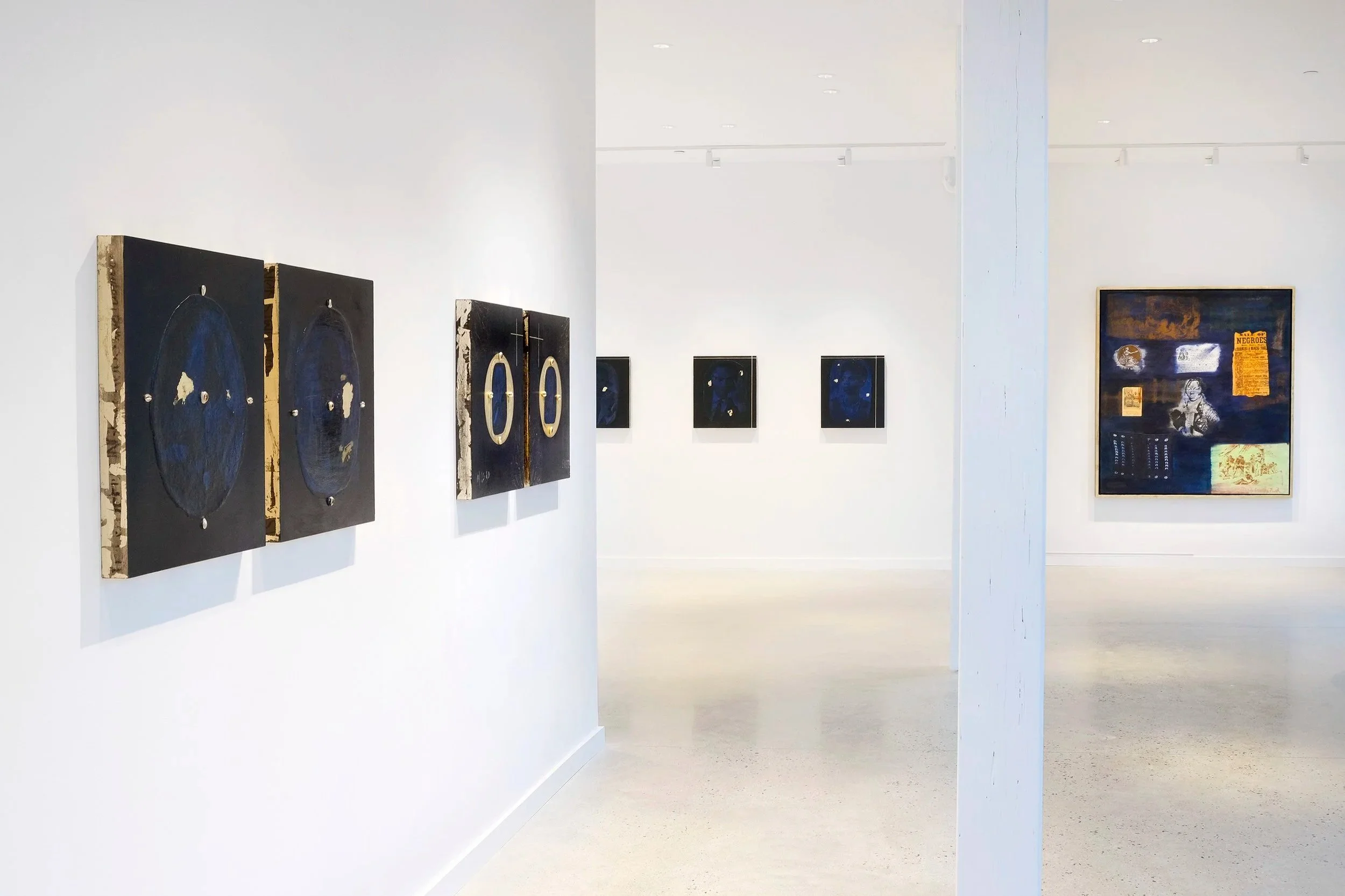
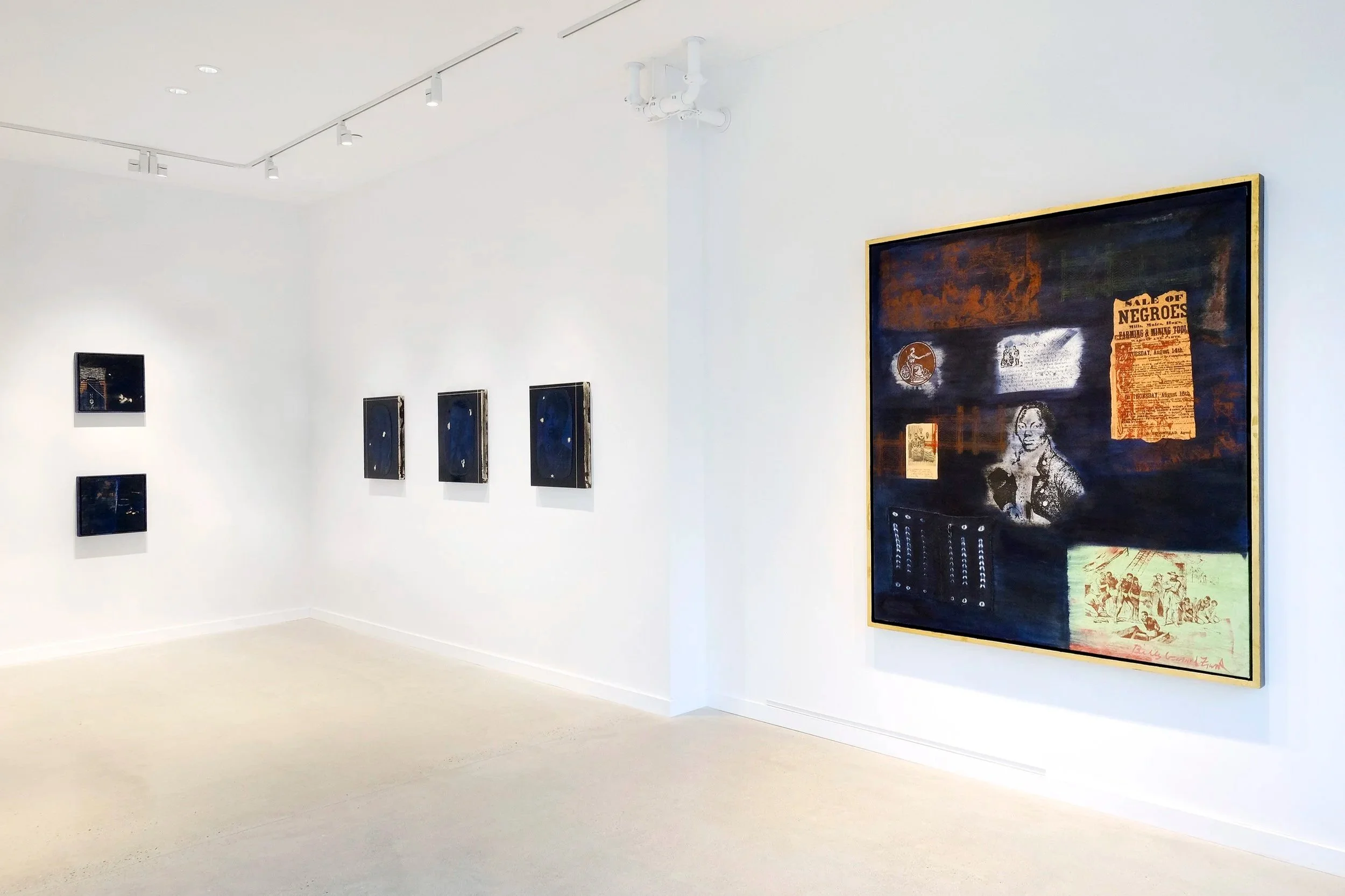
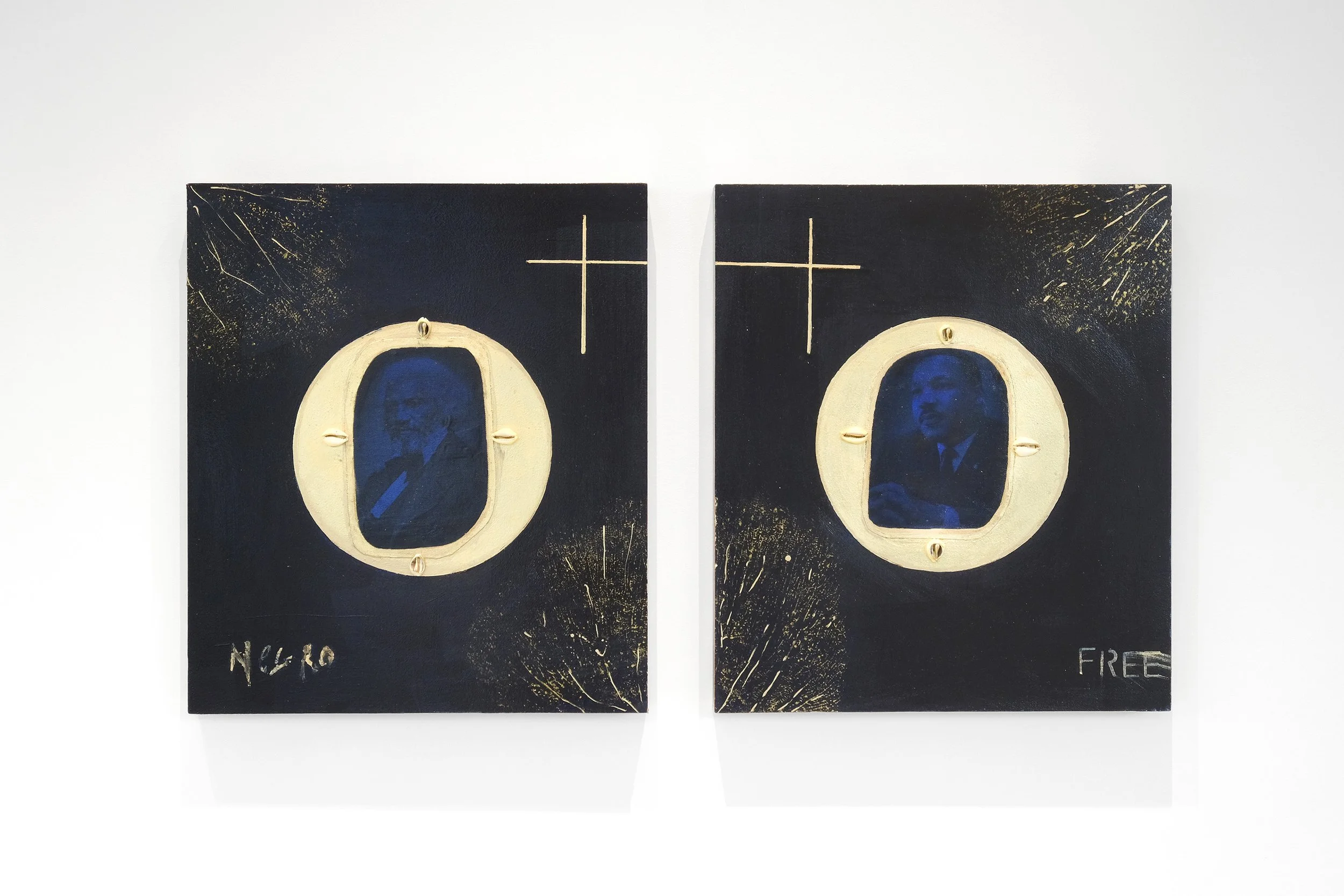
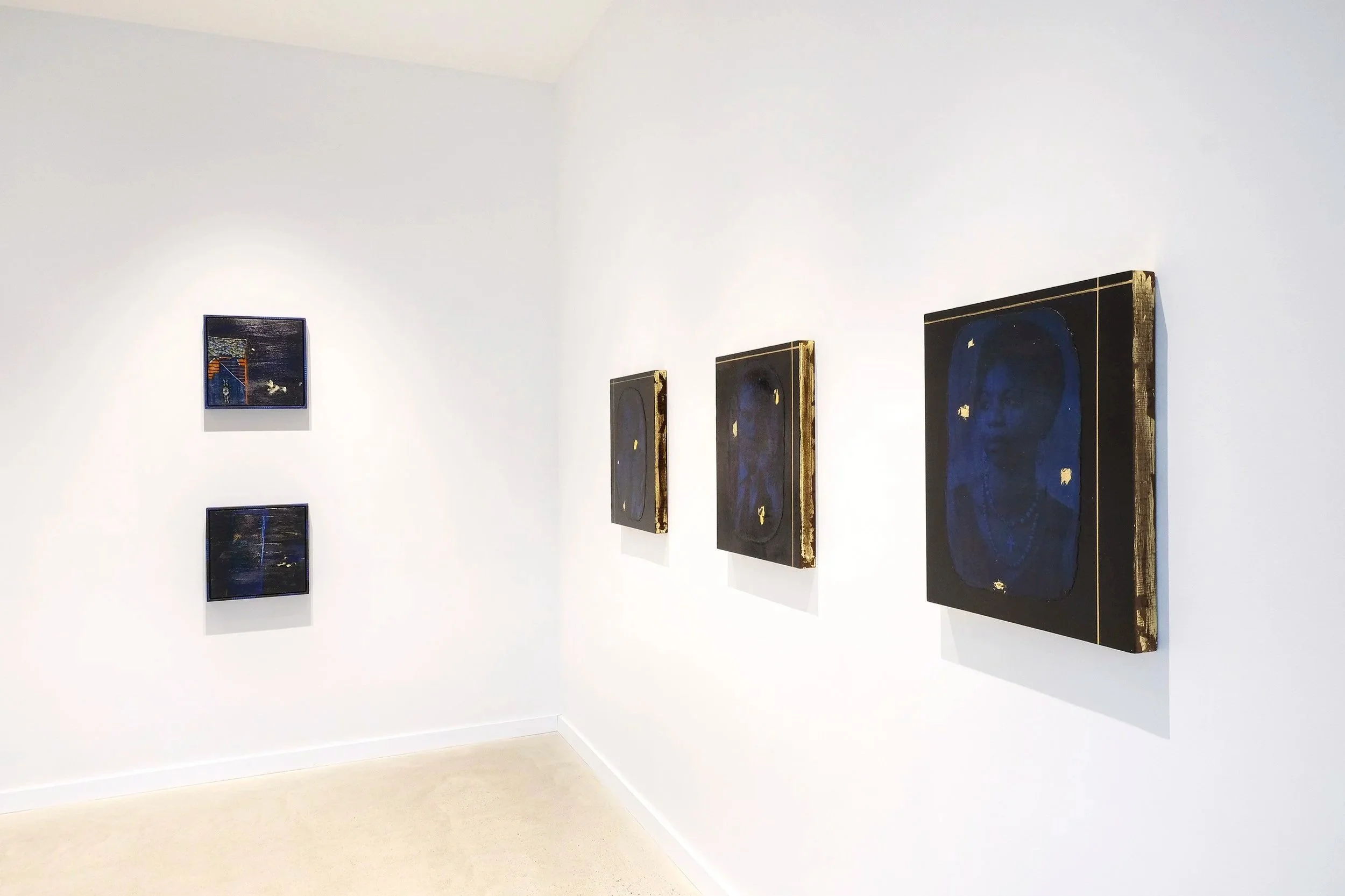
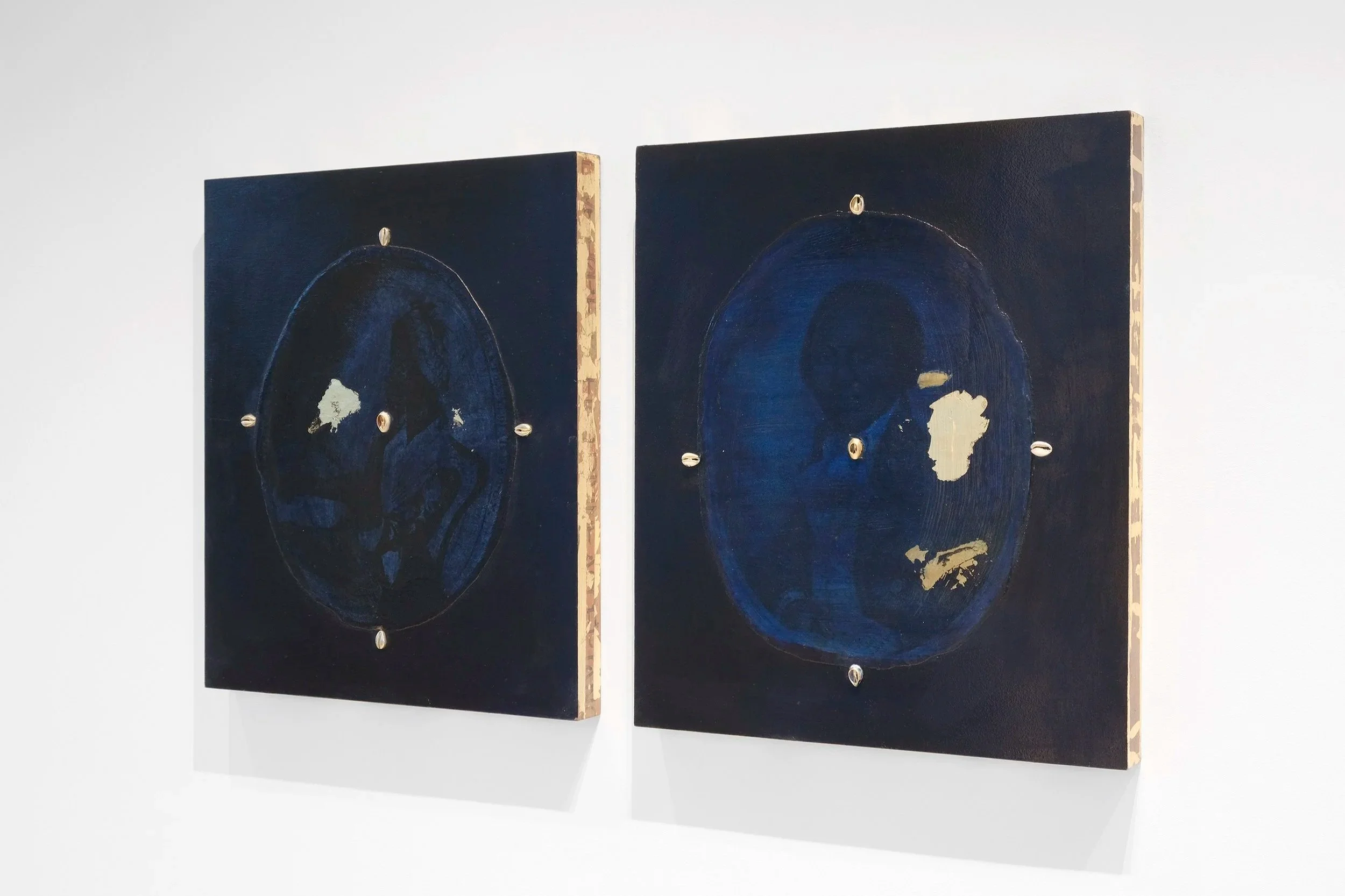
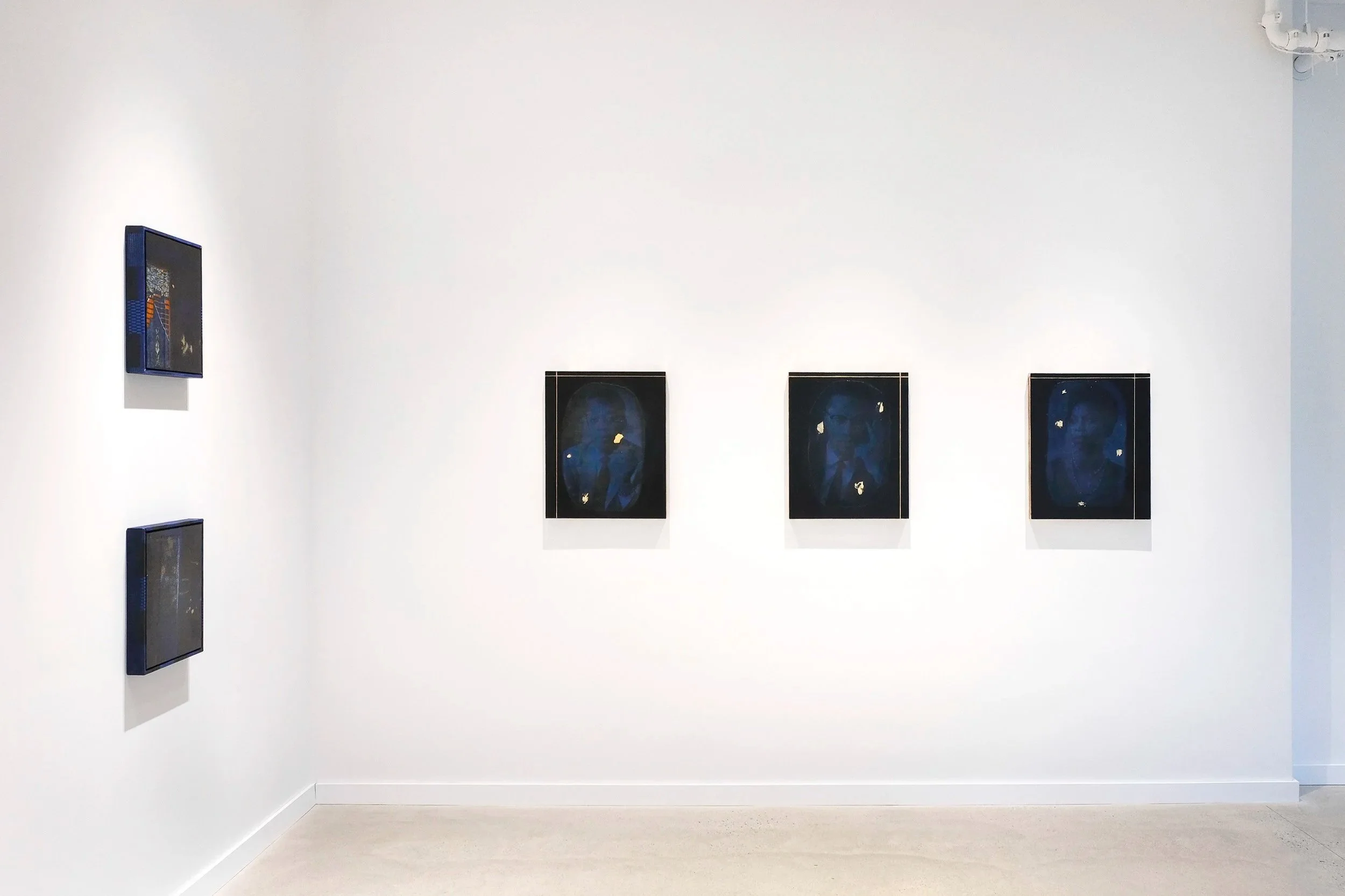
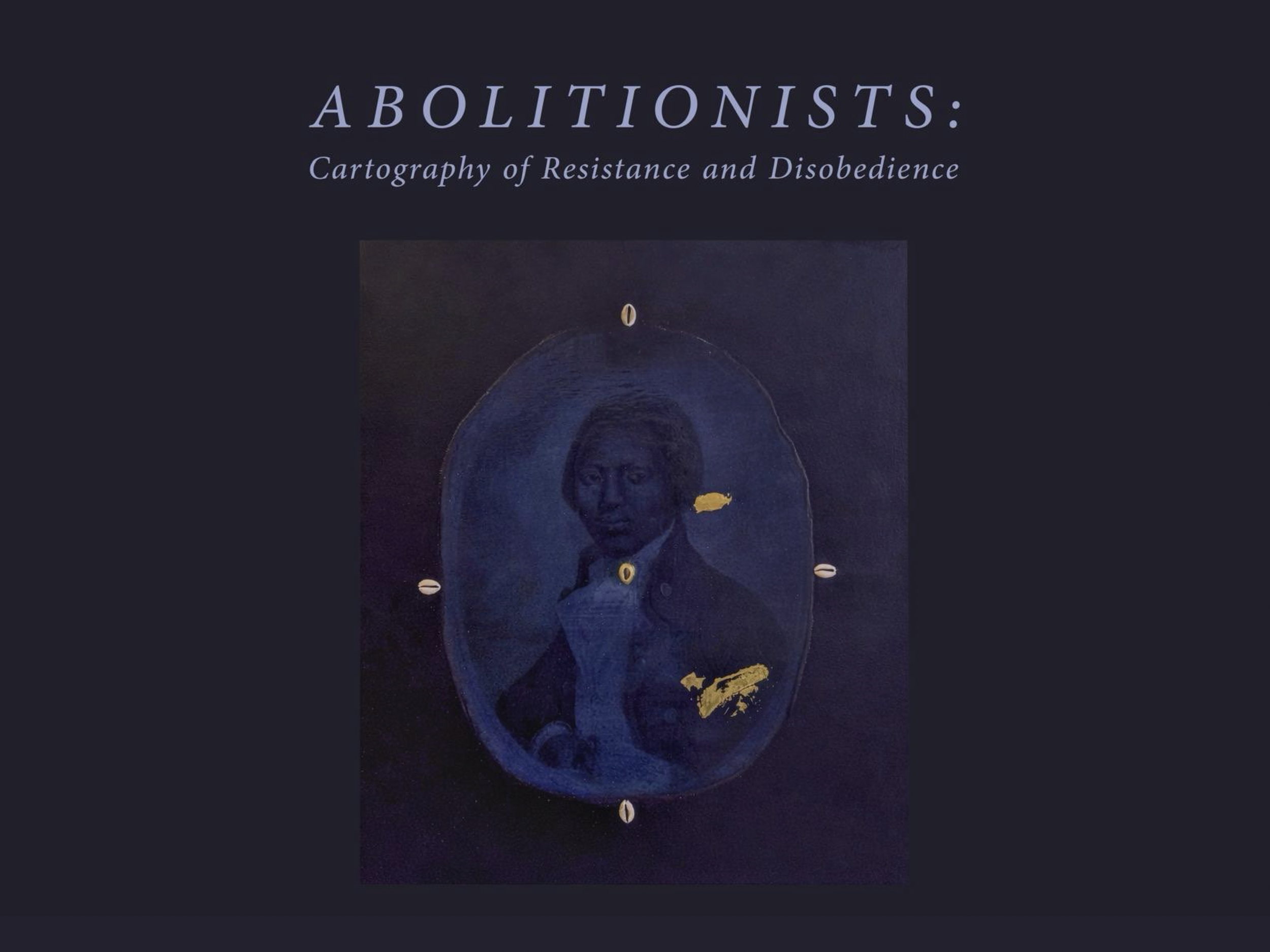
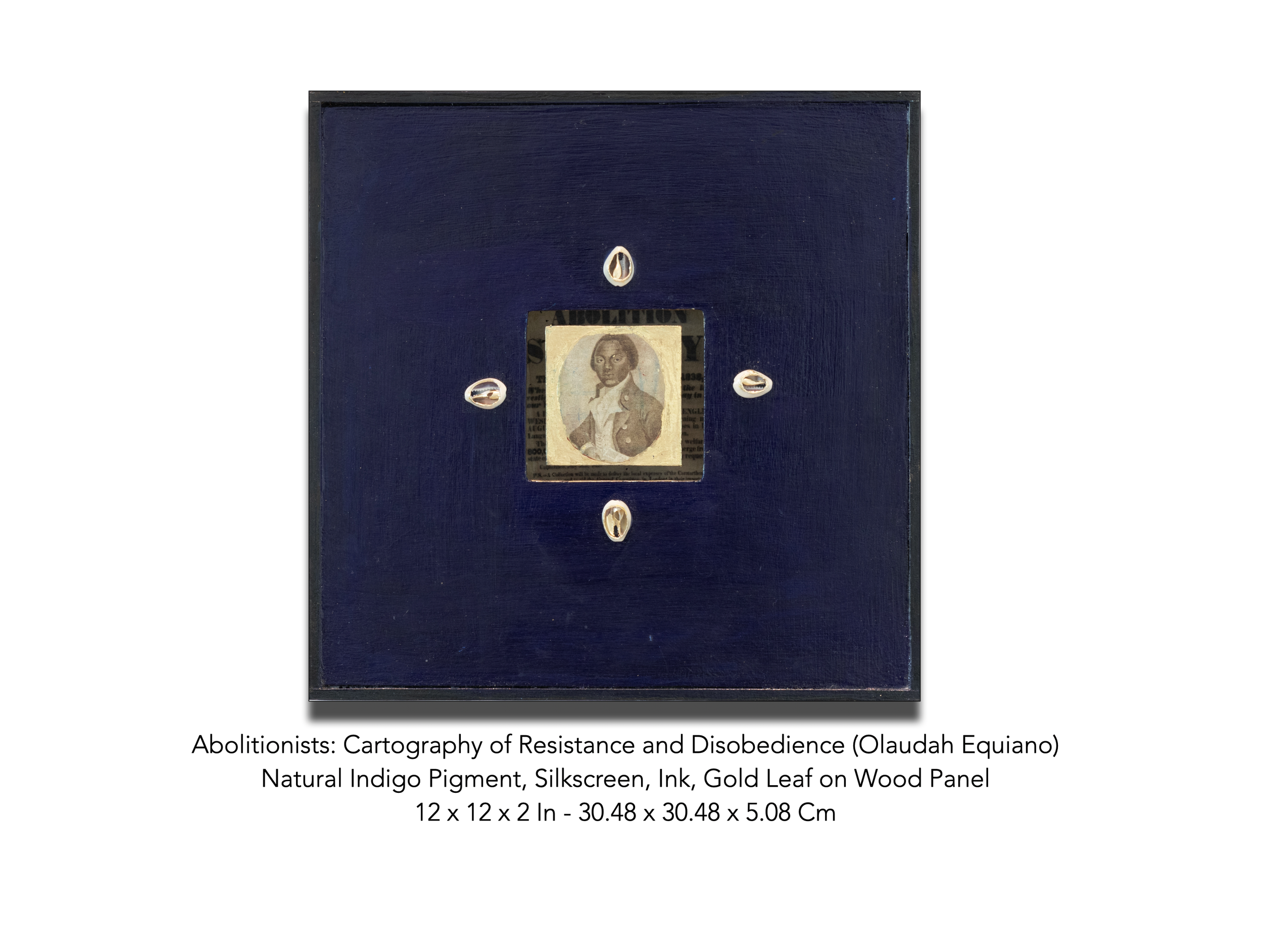
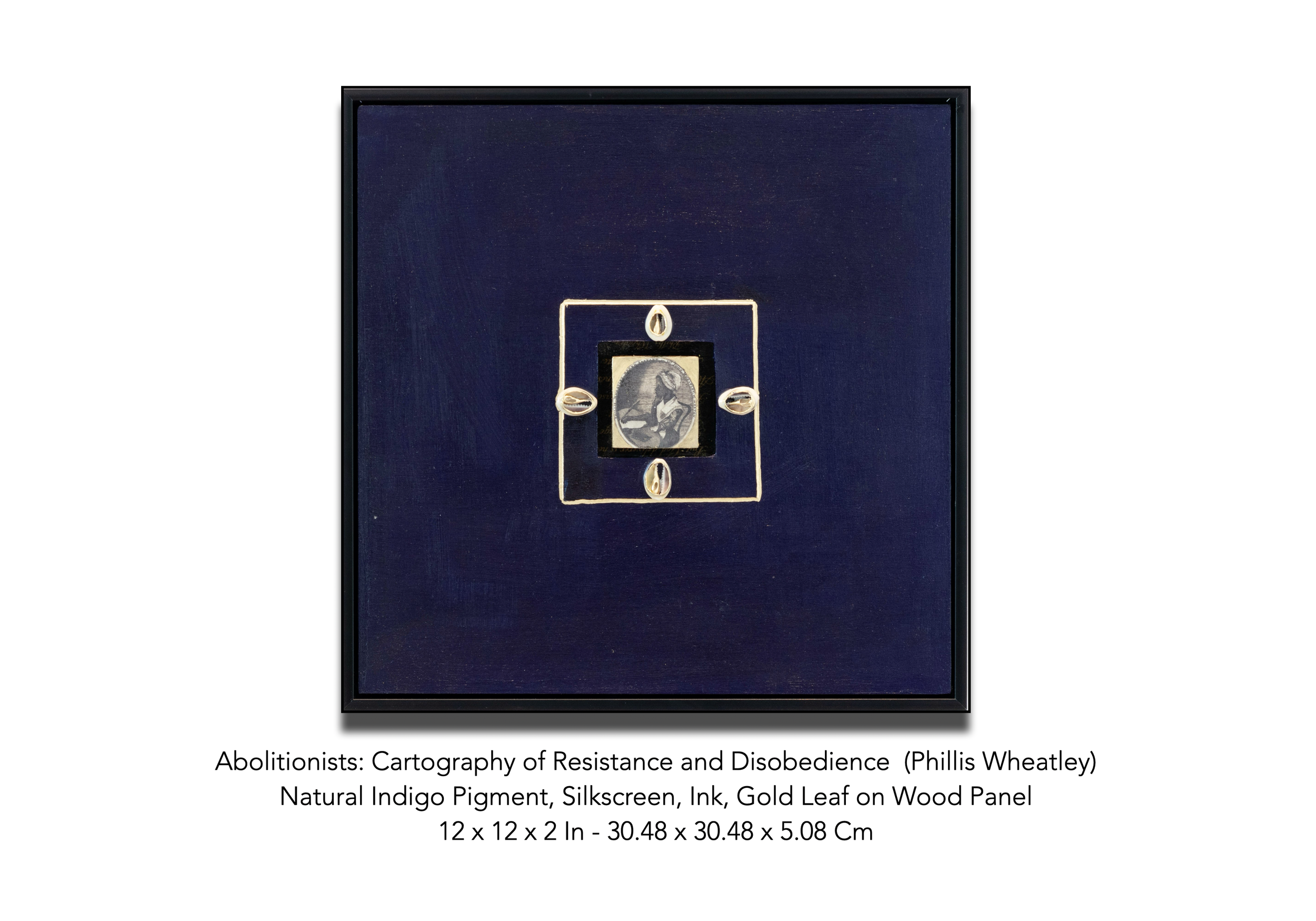
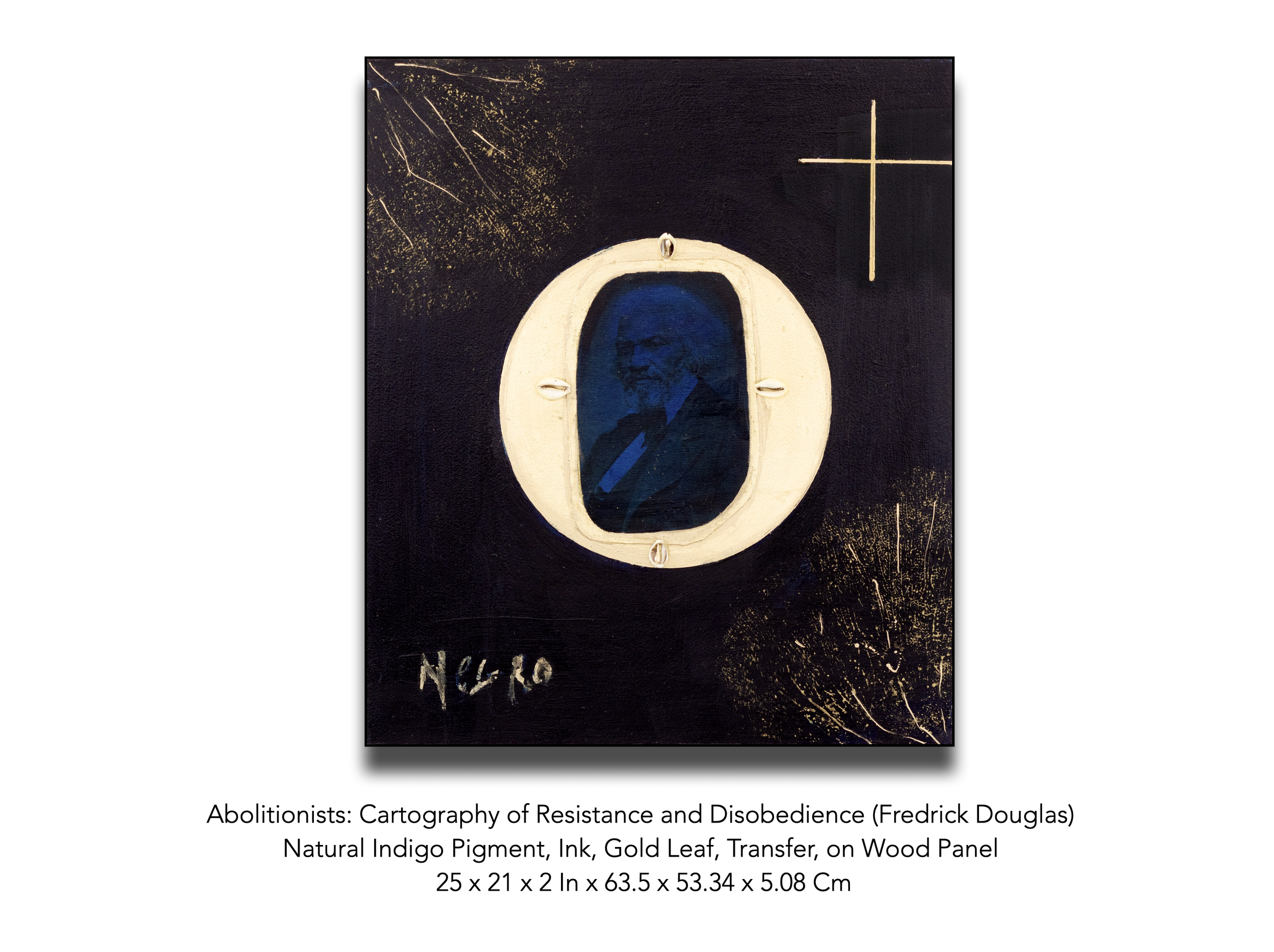
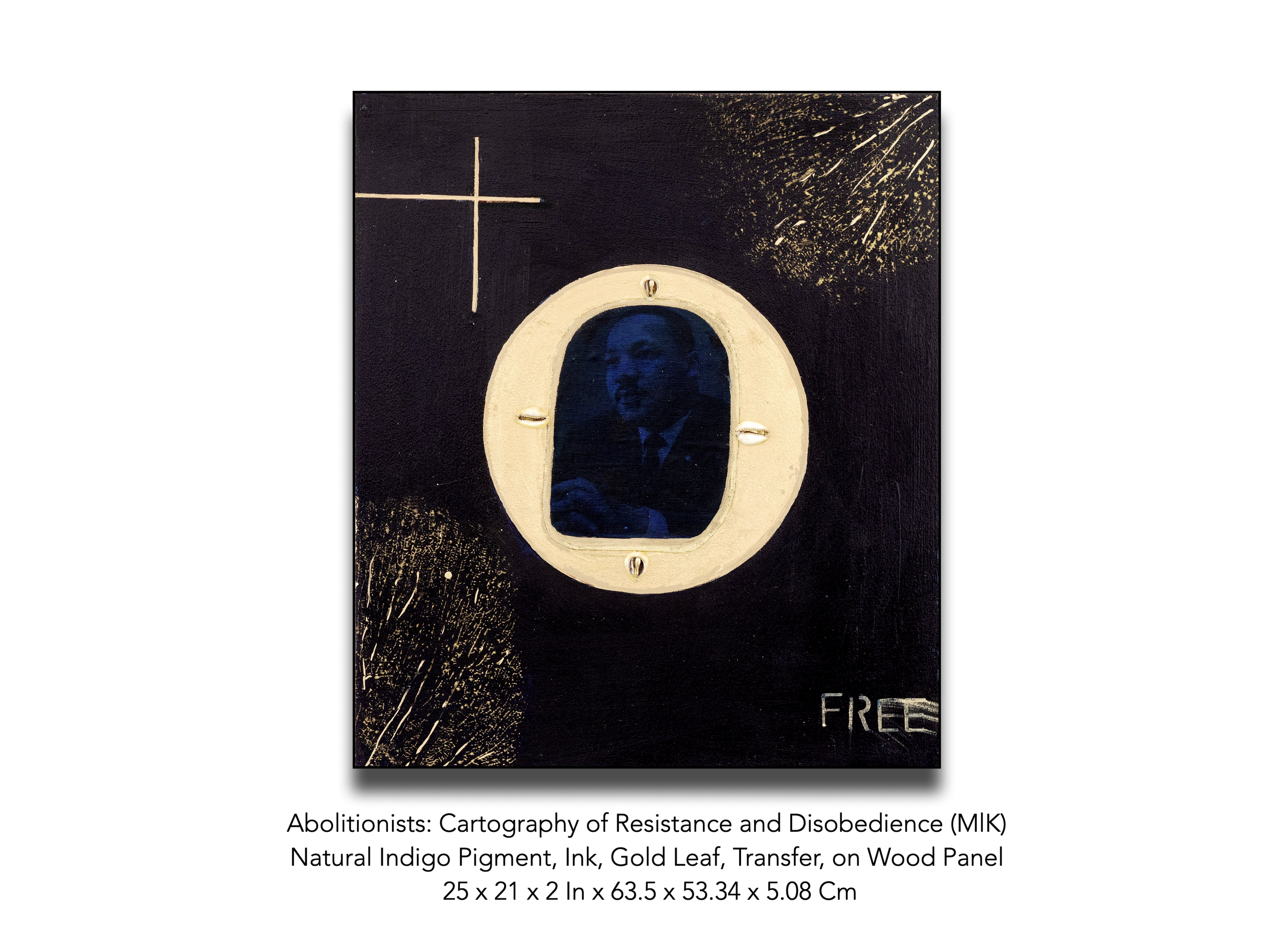
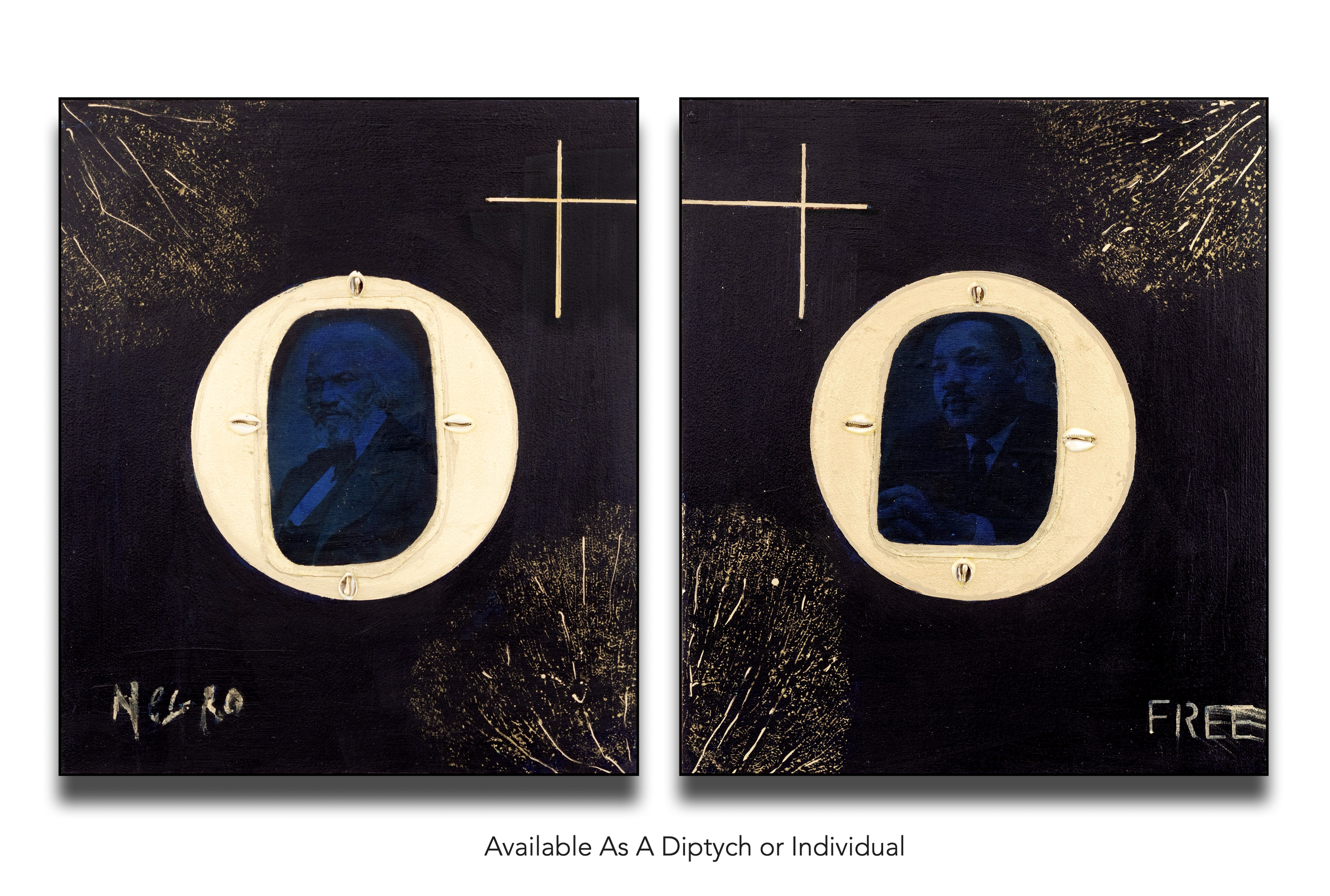
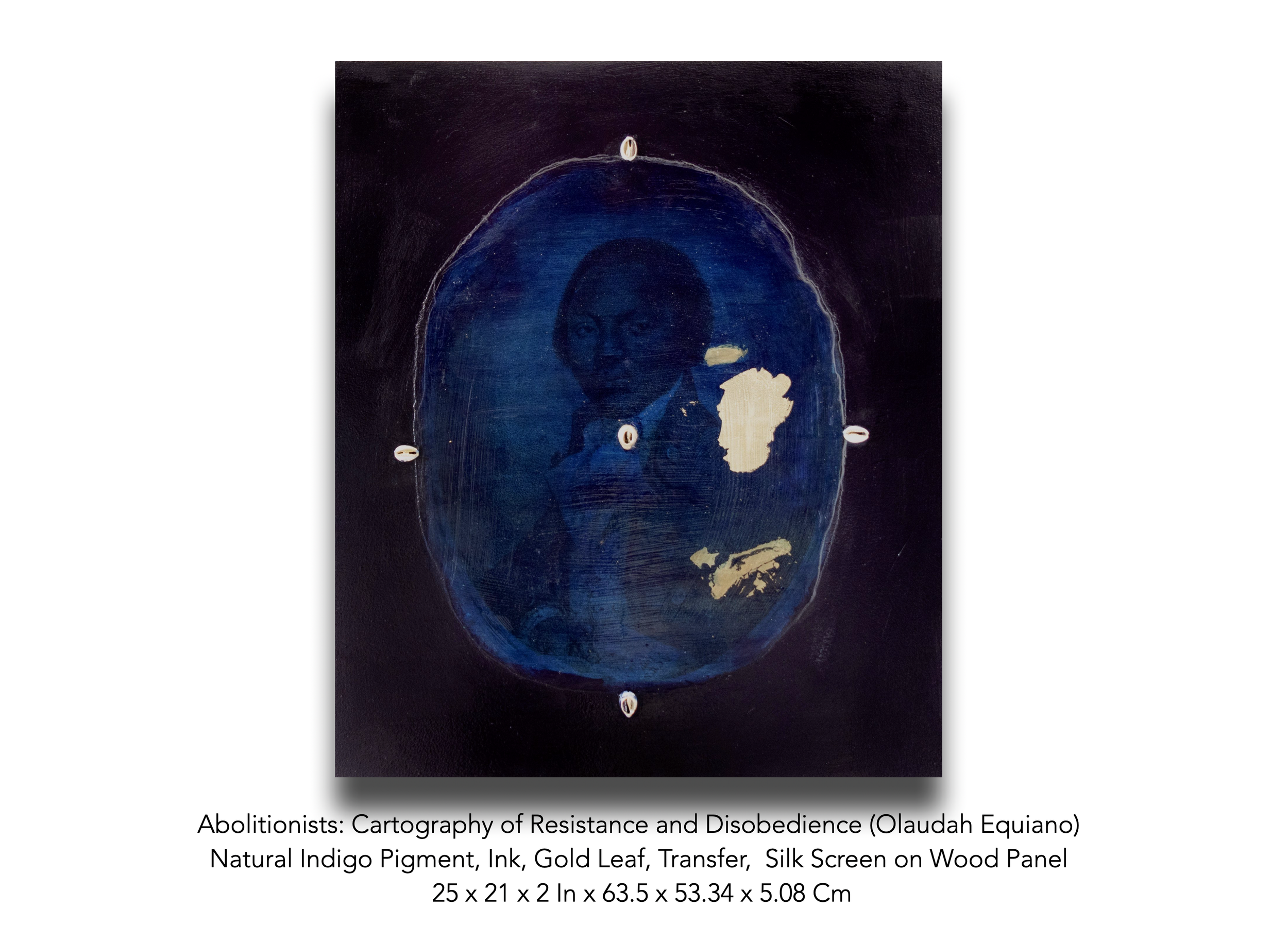
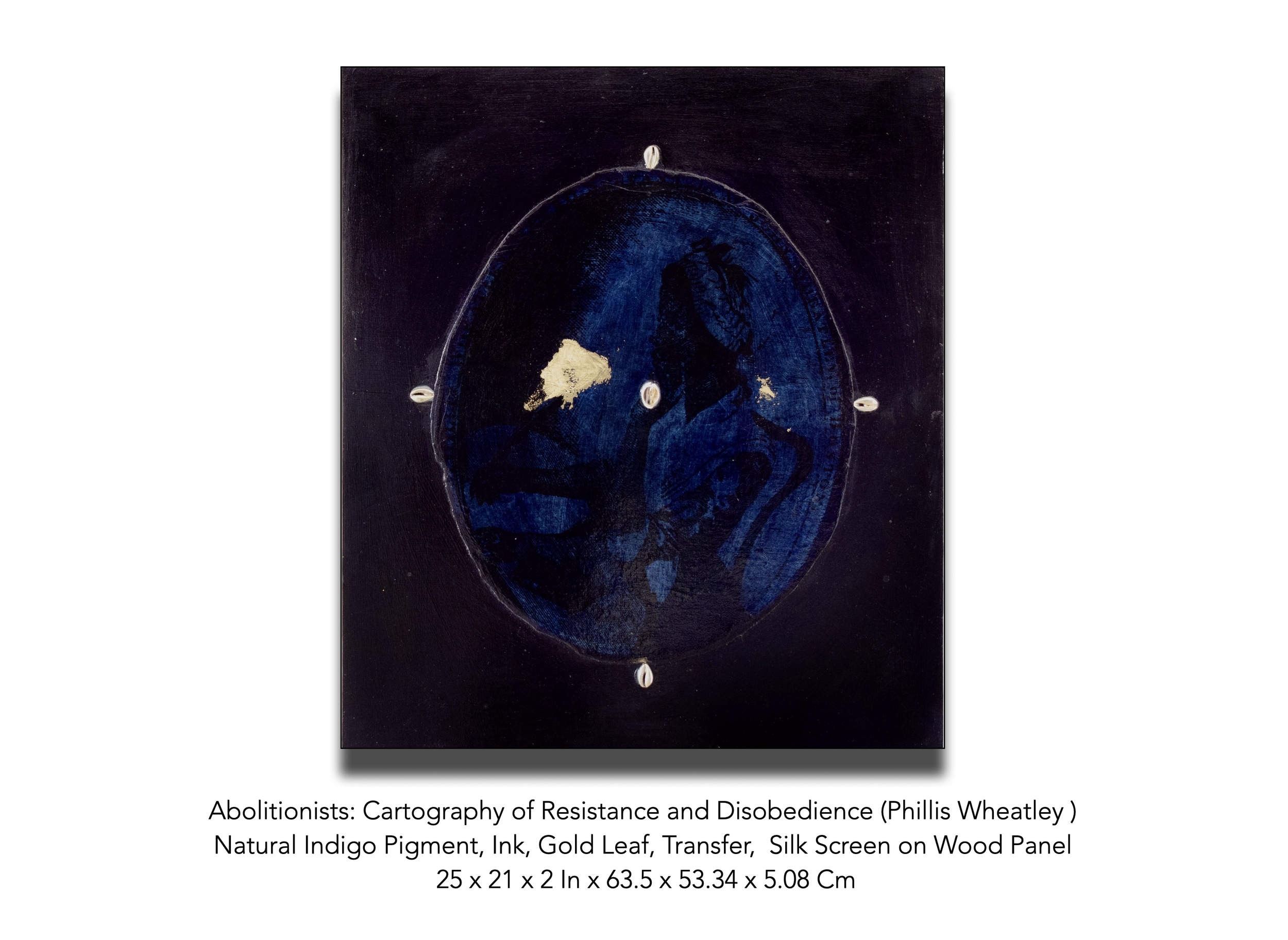
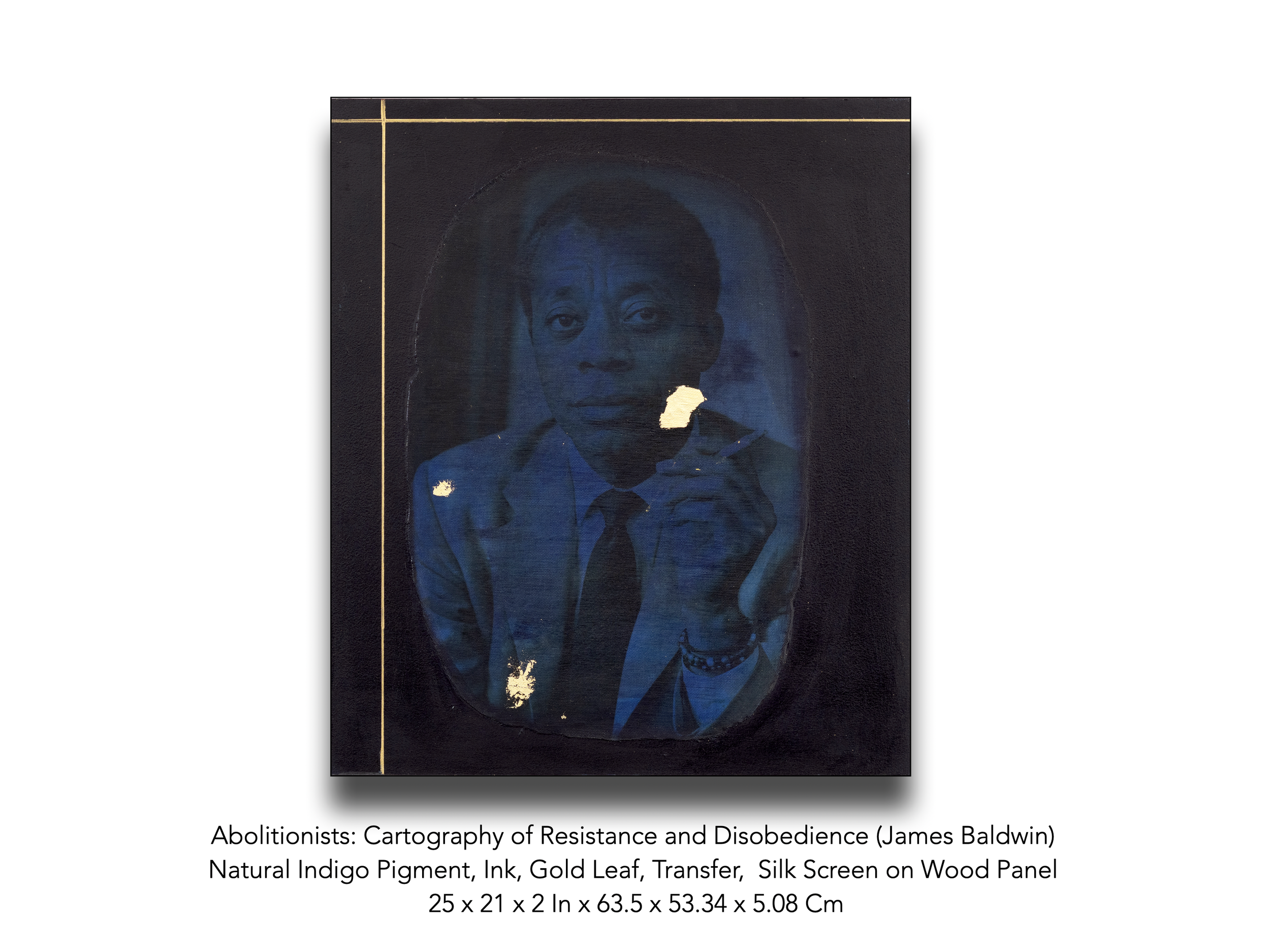
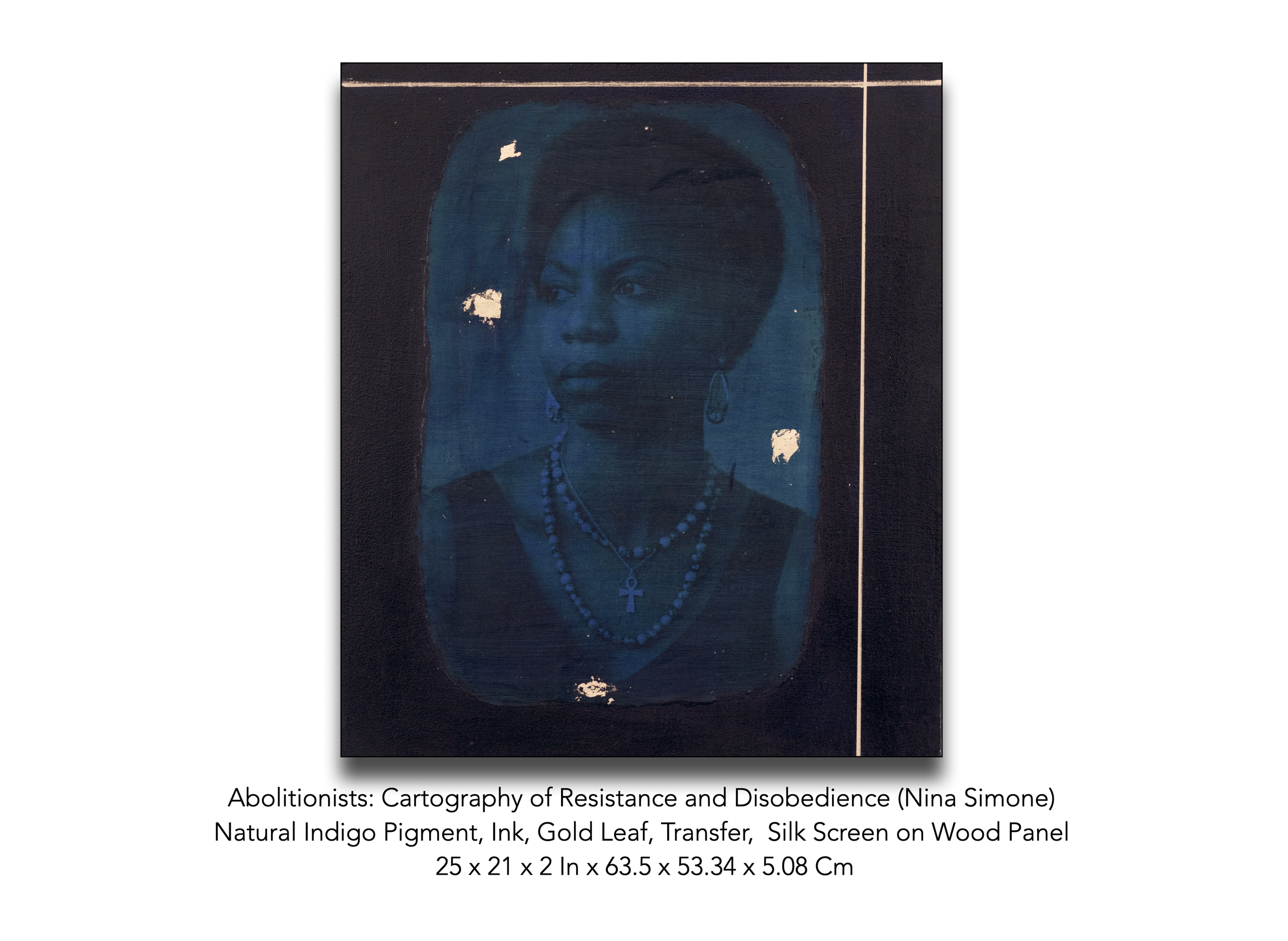
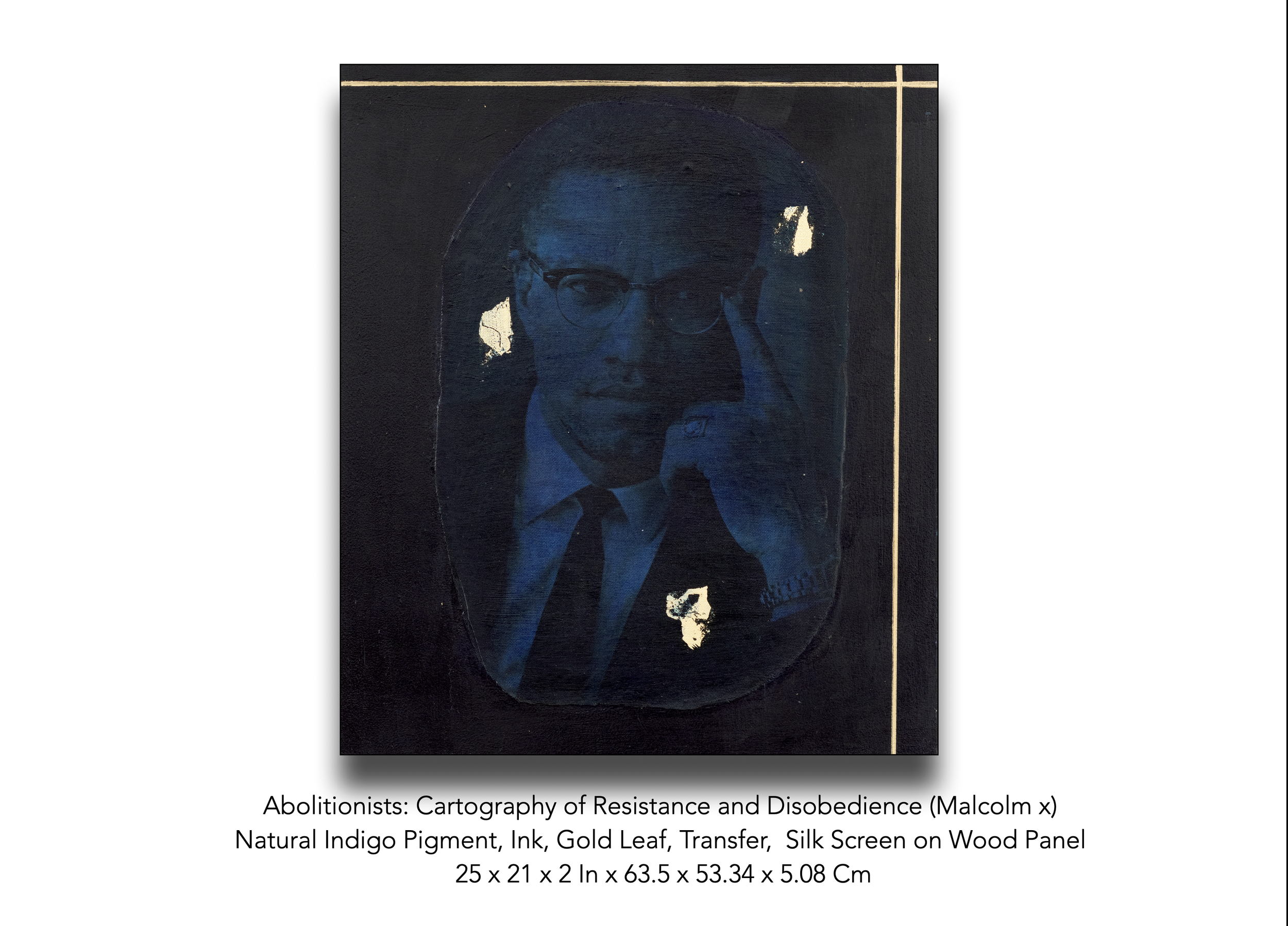
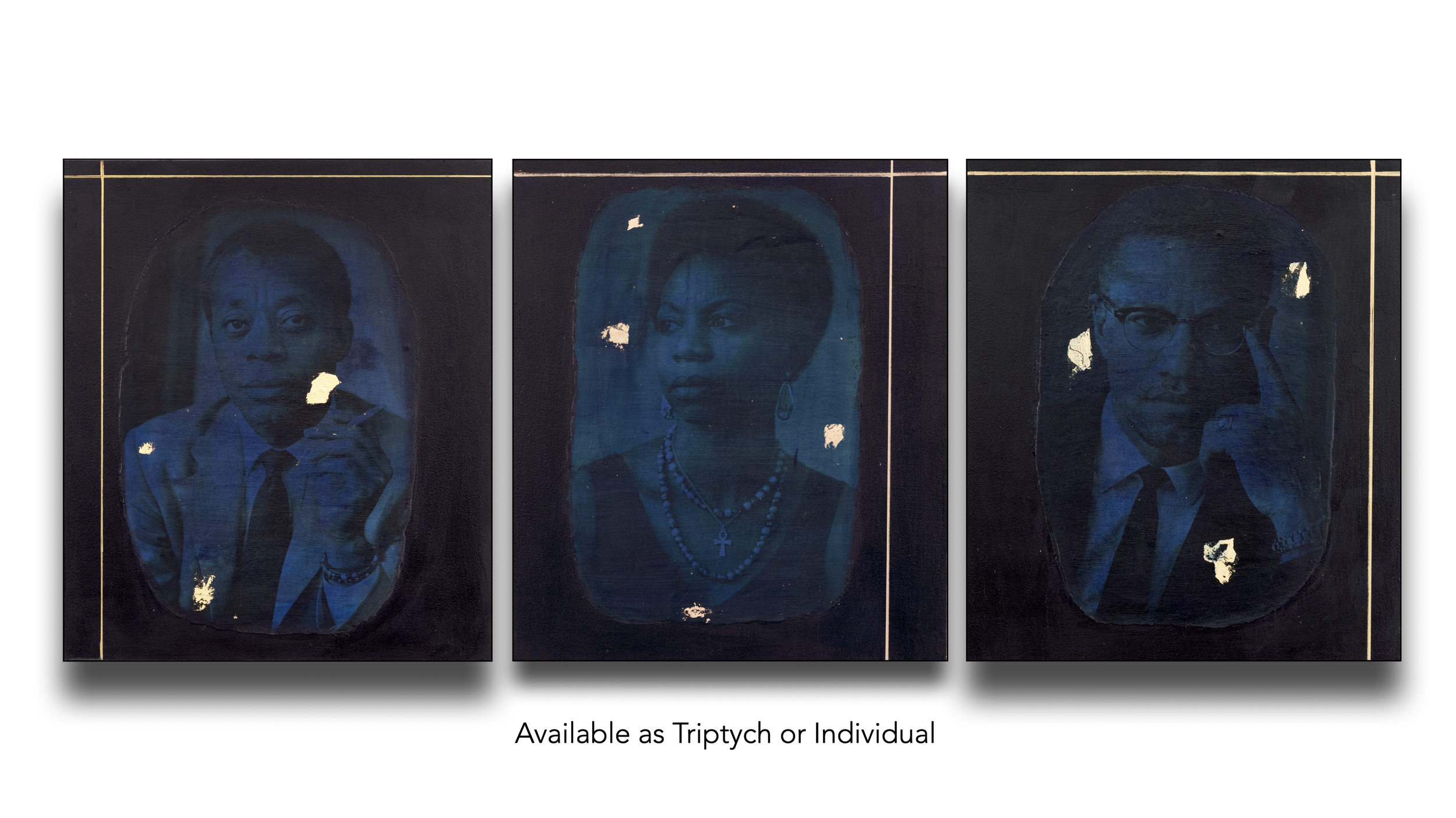
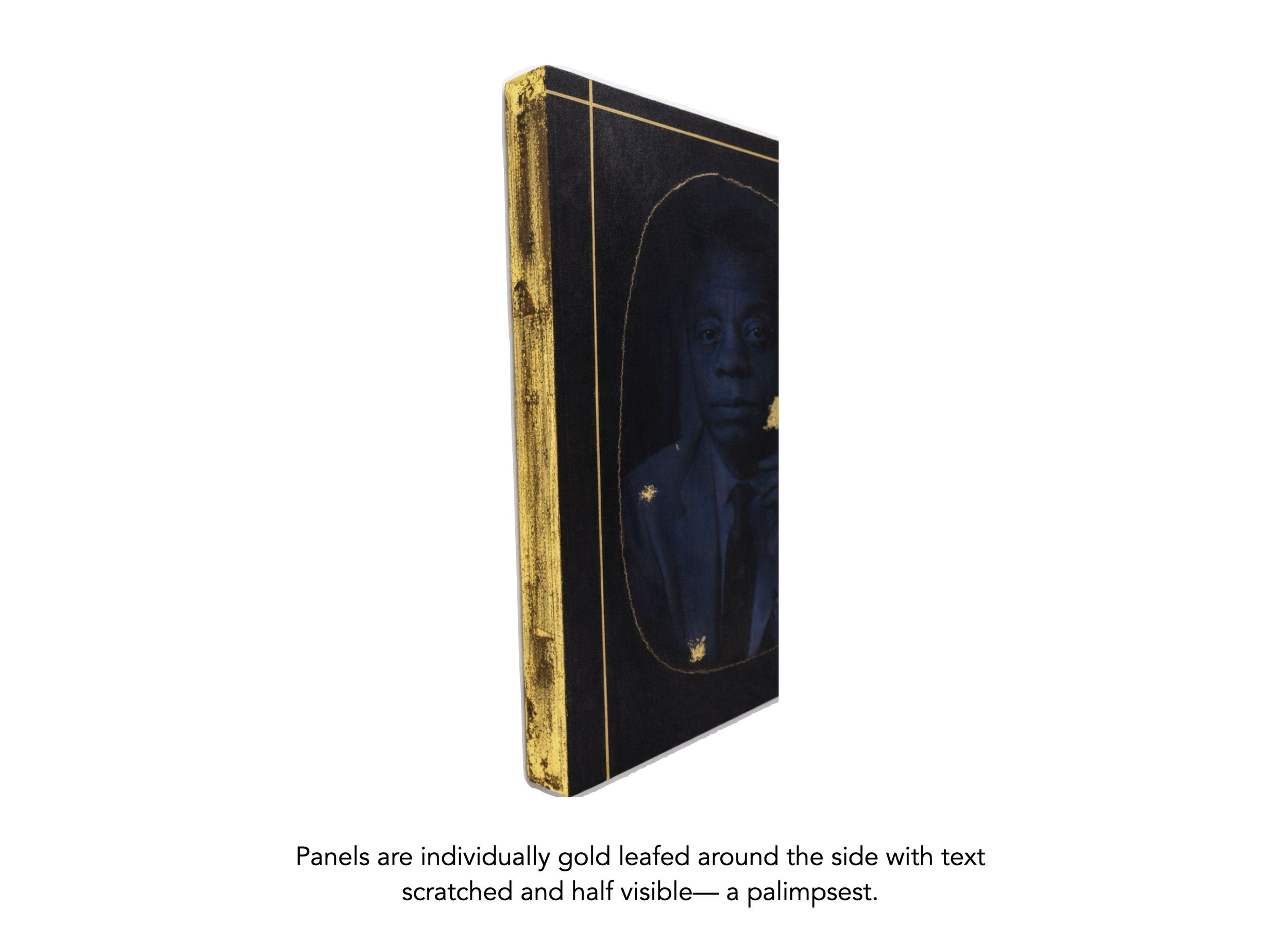
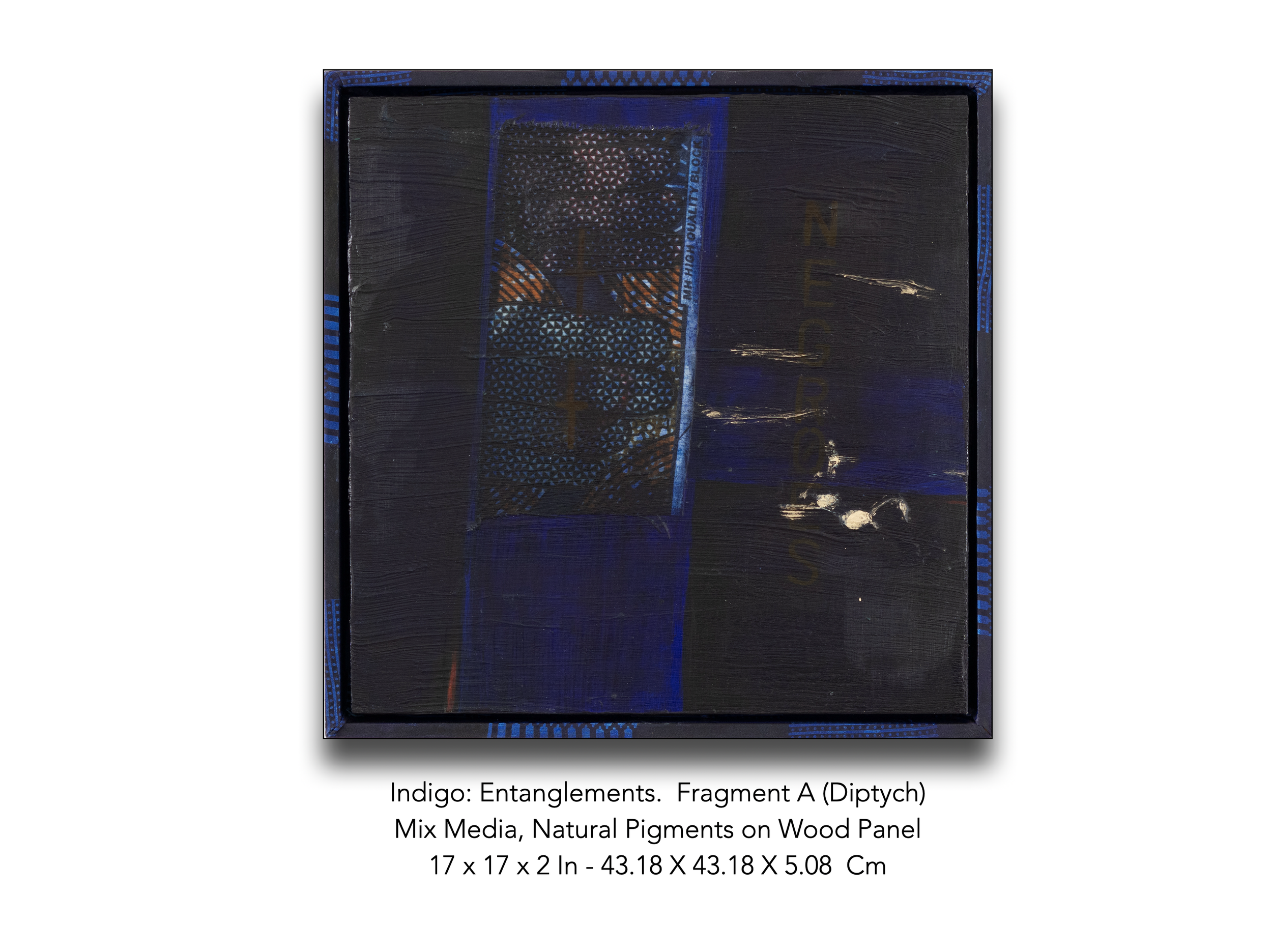
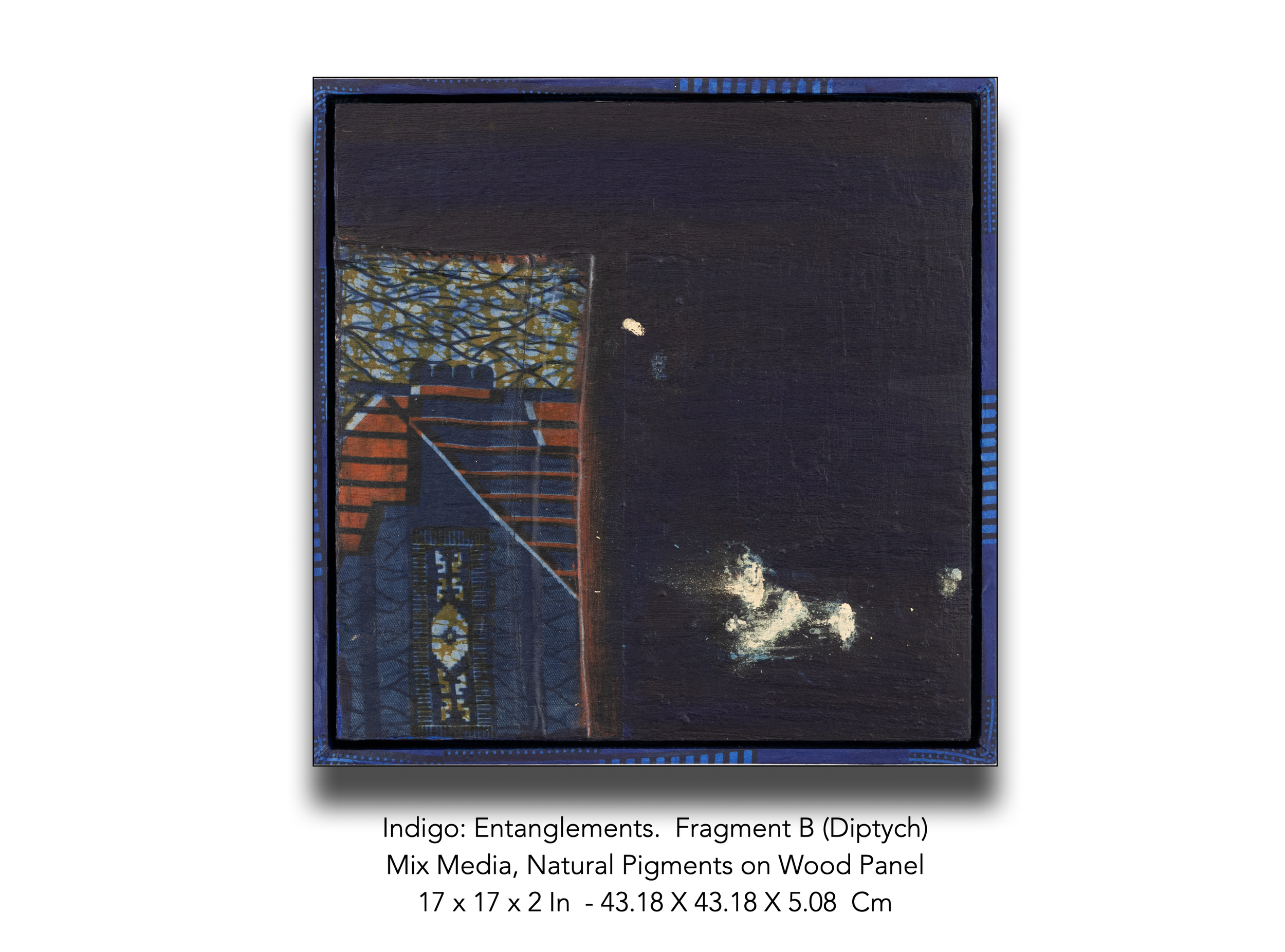
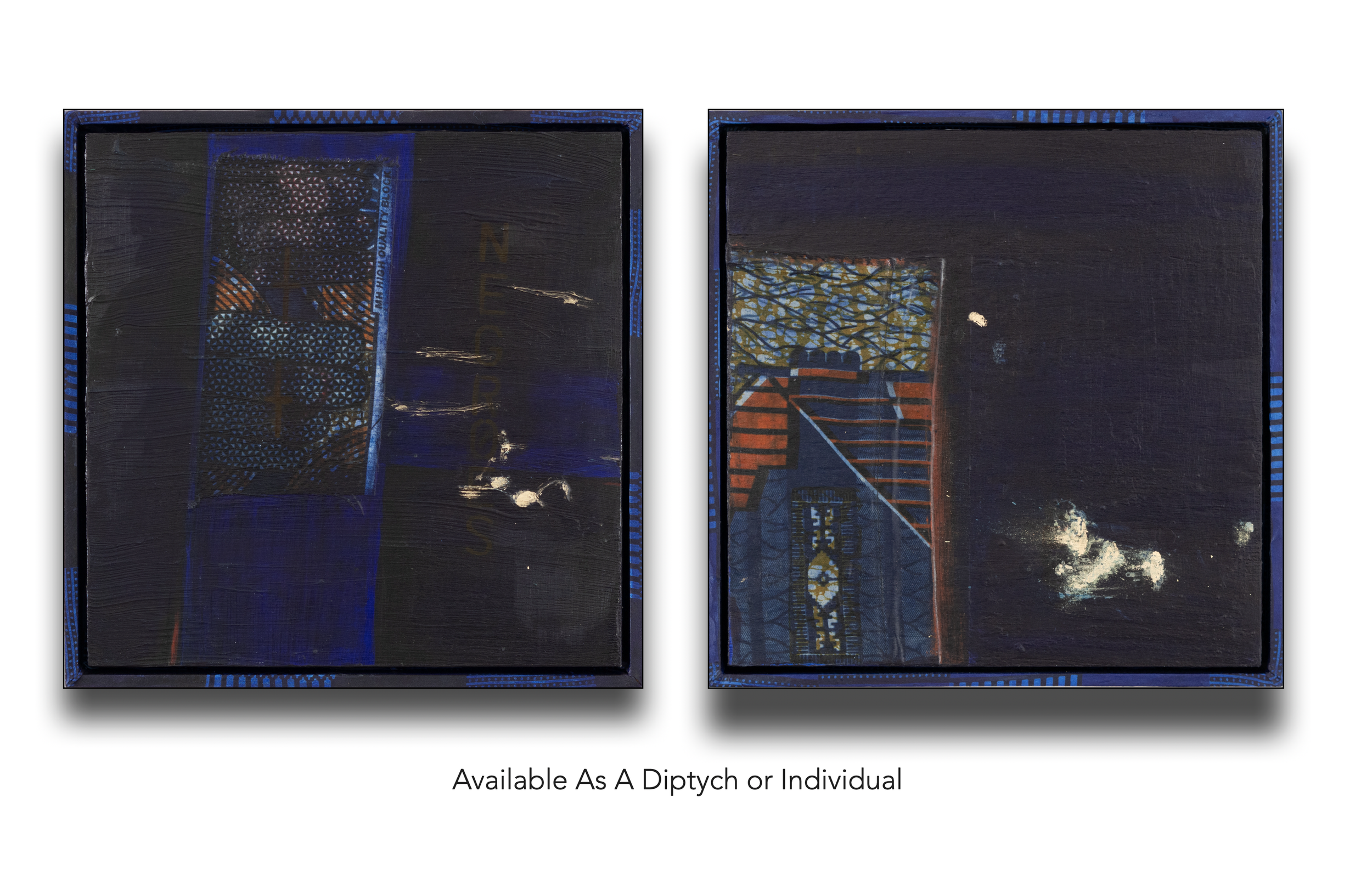
Abolitionists: Cartography of Resistance and Disobedience is a series of mixed-media works on wood panels, fabric, and canvas, created with natural indigo pigments, black ink, and gold. The surfaces carry a material presence that evokes both sculptural relief and the spectral tonalities of early daguerreotypes.
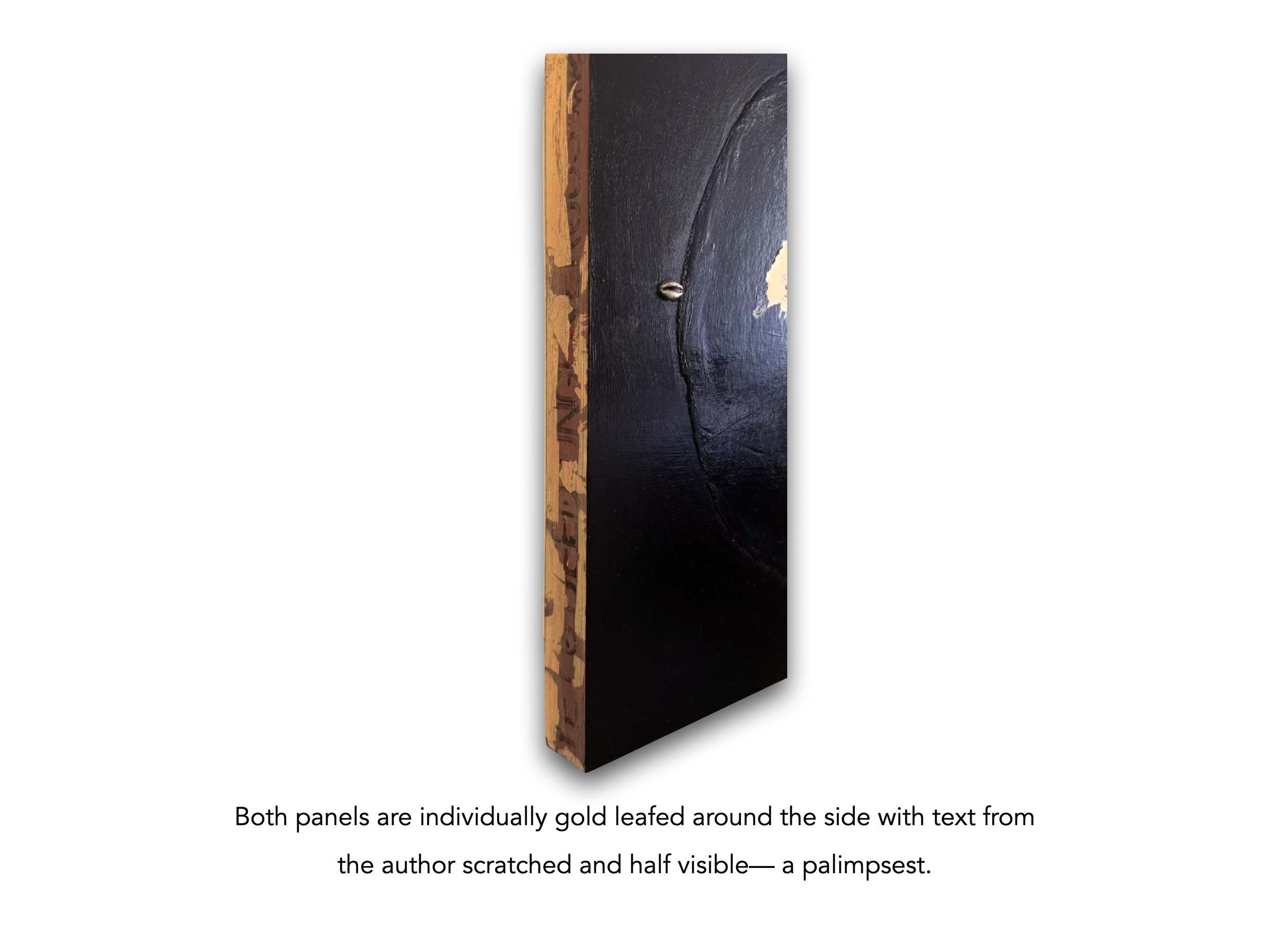
Drawing from the lives and legacies of Black abolitionists—both known and obscured—the works function as material palimpsests: layered surfaces in which history, erasure, and resistance coexist.
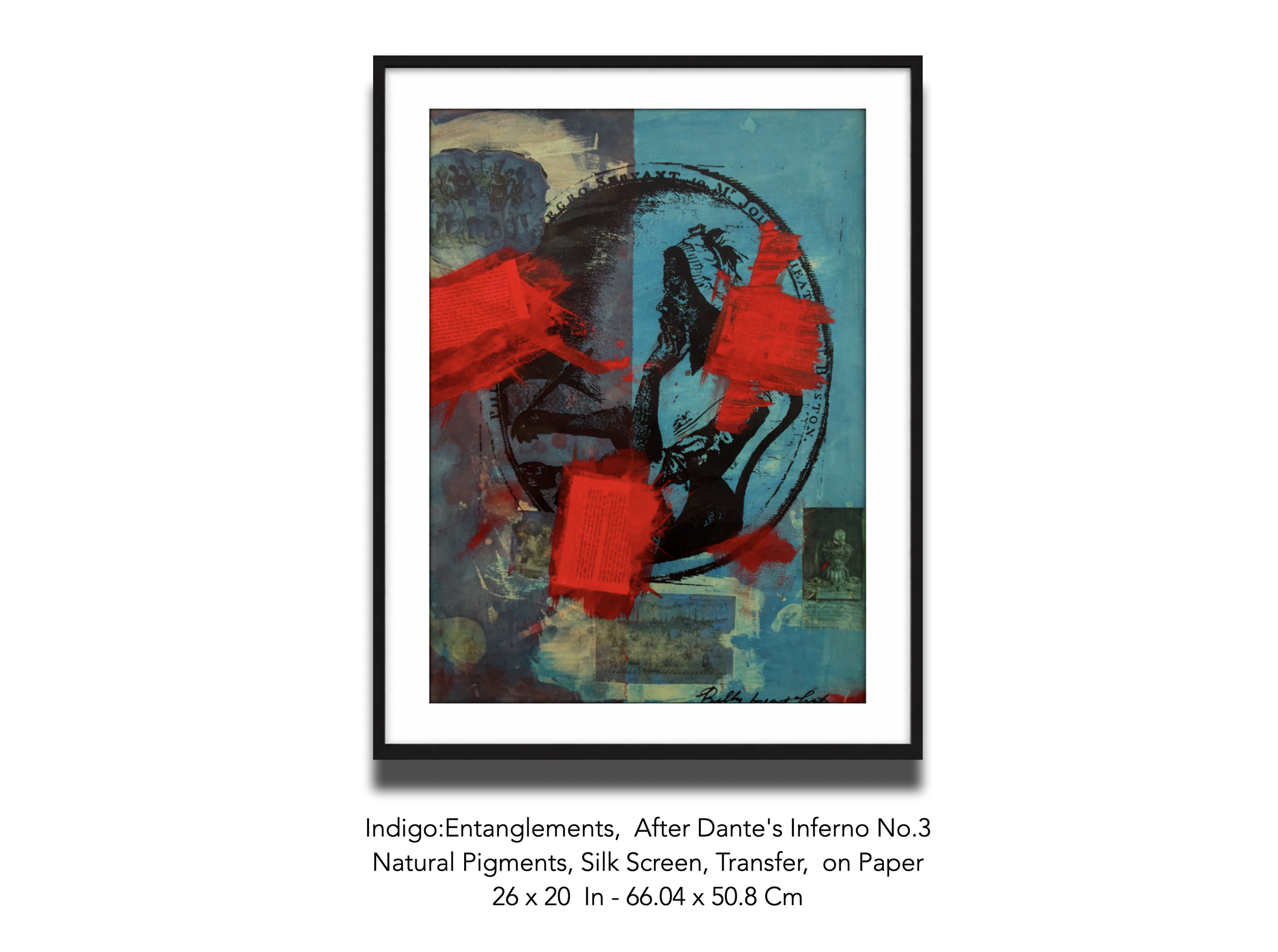
Each piece operates as a fragment of a broken archive, employing natural indigo pigments as the central medium, silkscreen, etching, transfers, gold leaf, and ink; the surfaces bear the scars of labor, displacement, and survival. Indigo, a pigment historically bound to plantation economies and the forced extraction of Black and brown labor, becomes both medium and metaphor: a residue of violence and a site of transformation. Gold, long associated with wealth accumulated through enslavement, is reclaimed here as a sign of Black life, dignity, and spiritual endurance.
Figures such as James Baldwin, Nina Simone, and Malcolm X appear alongside earlier abolitionists like Olaudah Equiano and Phylis Wheatley, collapsing temporal distance to reveal how past struggles continue to reverberate in the present. Their presence reflects the enduring role of the artist as witness and agitator, echoing Baldwin’s insistence that “artists are here to disturb the peace.” The works ask what it means to practice this disturbance today, at a moment when Black histories are being erased, misremembered, or violently suppressed, and when Black bodies, voices, and cultural memory remain under threat.
Rather than presenting heroic portraits or fixed narratives, the series proposes an abolitionist cartography that traces how freedom has always been fugitive, relational, and incomplete.
Abolitionists: Cartography of Resistance and Disobedience insists that freedom is still becoming. Abolition is not merely the formal end of slavery, but an ongoing struggle to dismantle the afterlives of bondage, racial capitalism, carceral systems, borders, and regimes of surveillance that continue to regulate Black and brown life. The sculpted panels, with their gouged surfaces and luminous interruptions, mirror this condition: freedom is not a stable state, but a fragile, contested, and continually remade process.
In this way, the series does not simply memorialize the past; it activates it. These works invite viewers to encounter abolition not as a closed historical chapter, but as a living, unfinished project that stretches from the radical visions of enslaved rebels and Black women abolitionists to contemporary movements for justice, dignity, and collective liberation.
Also included in the exhibition is a painting from the Indigo: Entanglements series, produced at Wolfe Editions in Portland, Maine. The series Abolitionists: Resistance and Disobedience can be understood as an extension of Indigo: Entanglements, continuing its exploration of the transatlantic world and the entangled histories of slavery, resistance, and memory from the eighteenth century to the present.
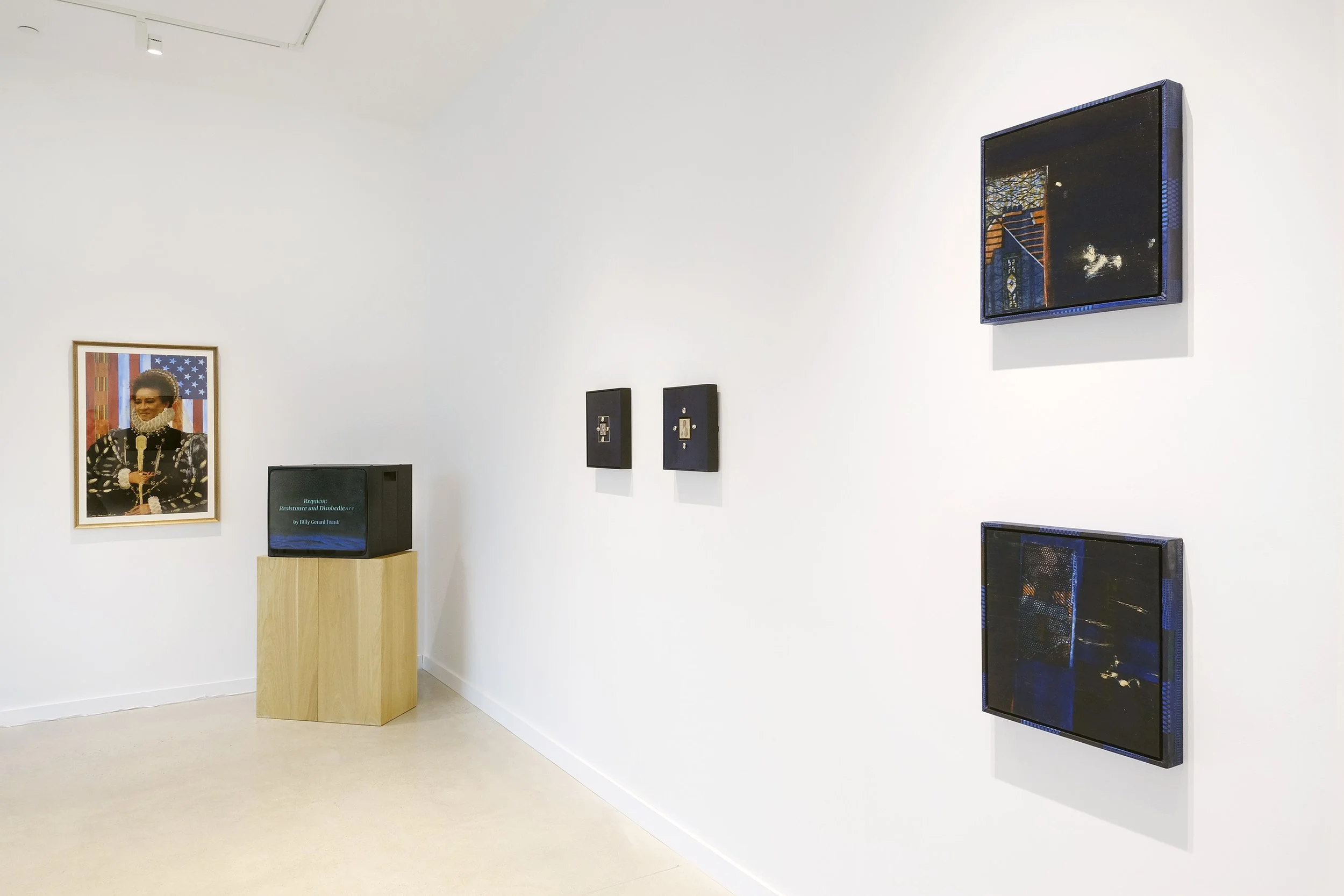
The exhibition also features a recently commissioned work, Who Is Queen Now, depicting Wanda Sykes in Elizabethan costume. The piece was created for the Trailer Blazer Park on Fire Island, an initiative that honors and celebrates LGBTQ lives and histories.
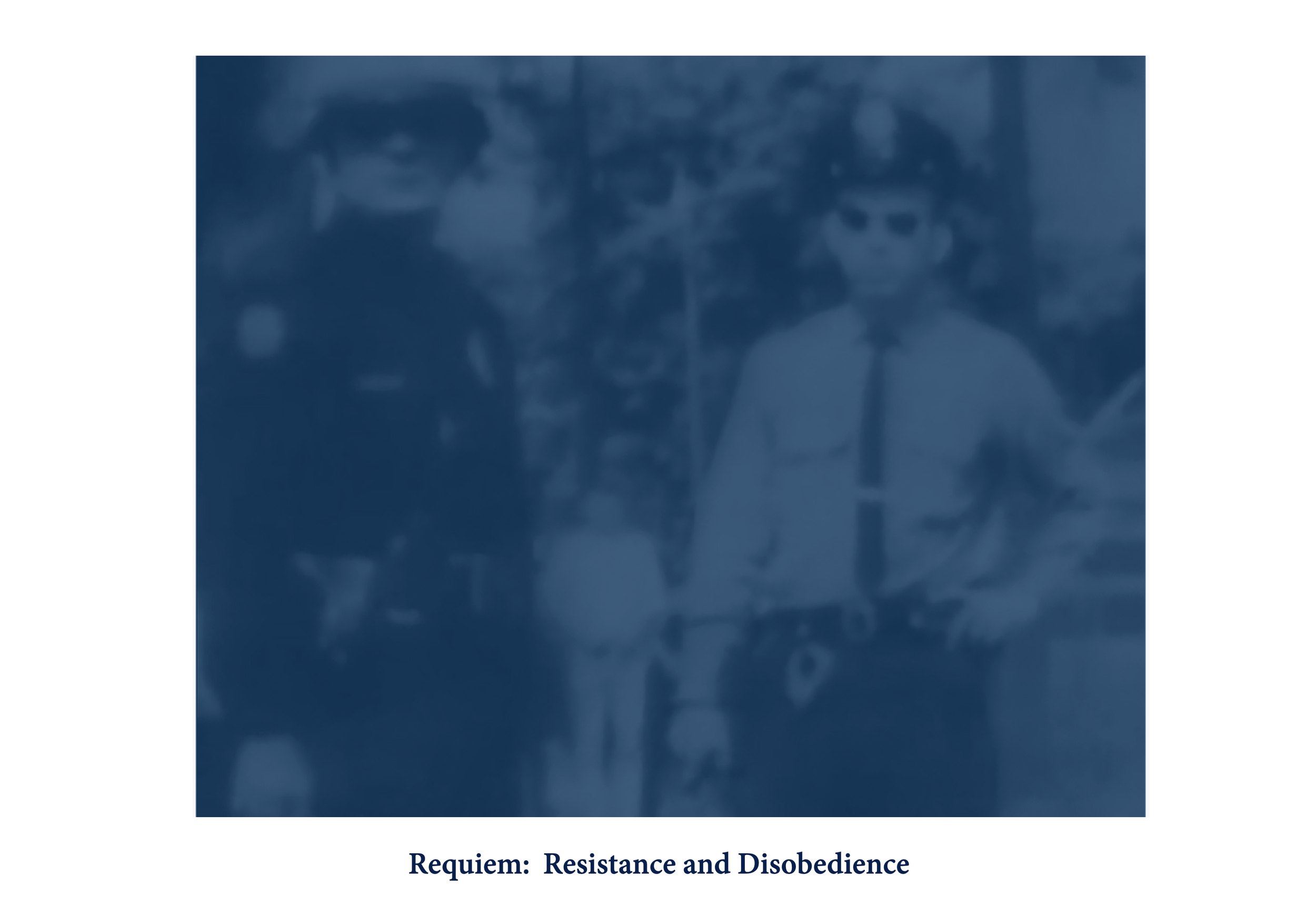
This single-channel video installation, conceived as a continuous 10-minute loop, brings archival footage of police dogs and state violence against Black children and demonstrators during the Civil Rights Movement into direct dialogue with the voices of James Baldwin and Martin Luther King Jr. The work refuses the distance of historical time, collapsing past and present into a hyperreal, embodied encounter with abolition as an unfinished struggle.
The footage, drawn from public news archives documenting Birmingham, Selma, and other sites of racial terror, focuses on close-ups, slowed gestures, and fragments of action: dogs lunging, hands shielding faces, children running, the moment of contact. These images are intercut with extreme close-ups of Baldwin’s lips as he speaks, and King’s mouth in a sermon, isolating speech as breath, flesh, urgency. Voice becomes bodily; language becomes a site of resistance under assault.
Visually, the work is rendered in black and white, occasionally washed in deep indigo-blue tones that echo the material palette of the surrounding paintings and panels. This chromatic constraint abstracts the archival material just enough to avoid spectacle, while retaining the unbearable specificity of violence.
Rather than offering a narrative arc or resolution, the loop denies closure. The repetition mirrors the cyclical nature of racial violence and the ongoing need for abolitionist thinking, not only as the historical end of slavery, but as a contemporary project aimed at dismantling the afterlives of bondage: police violence, carceral regimes, borders, and systems of racialized control. The presence of children insists on the stakes of inheritance: abolition is not only about what has been done, but about what continues to be done to Black futures.
INSTALLATION VIEW BELOW AT MOSS GALLERY, PORTLAND, MAINE